





How do you maintain a wooden deck?
Clean, restore the colour and protect the wood: learn how to tailor maintenance to your deck’s condition, timber species and exposure, and how to establish an effective seasonal routine.
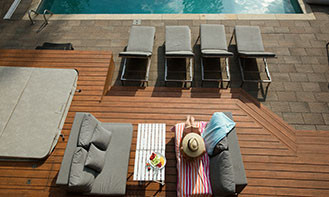
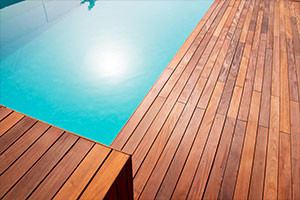
A wooden deck is exposed to rain, moisture, UV rays, temperature changes and regular foot traffic. Around a swimming pool, splashes of chlorinated water add to these challenges. Proper maintenance helps keep the surface clean and allows you to renew its protection when the wood needs it.
Inspect your deck regularly instead of applying a treatment automatically every year. Sweep away debris, clean dirt, use a wood brightener only if the wood has faded or turned grey, then apply a compatible wood saturator to clean, dry wood when its protection starts to wear. Explore our range of wood saturators.

The annual wooden deck maintenance routine
How often maintenance is needed depends on the timber species, sunlight, rain exposure, foot traffic and proximity to a swimming pool or vegetation. A sheltered deck that sees little use will not wear at the same rate as a busy space exposed to full sun or regular splashes.
Inspect the deck in spring, then check it again after a period of heavy use or severe weather. Spring is often a convenient time to clean the deck and decide whether its protection needs to be renewed, but the calendar should never replace an assessment of the wood itself.
| What you see | What to consider | What to avoid |
|---|---|---|
| Debris, dust or light dirt | Sweep the deck, remove leaves and wash dirty areas using a suitable method. | Letting deposits build up and trap moisture or become ingrained in the wood. |
| Dirty, stained or blackened wood | Clean with a product compatible with the timber species, rinse and allow the wood to dry. | Applying a saturator over dirt or cleaner residue. |
| Grey or dull wood | Use a wood brightener if you want to restore the wood’s appearance, then rinse and let it dry. | Applying a tinted finish directly and expecting it to lighten the surface. |
| Fading colour and weakening protection | After cleaning and drying, renew the protection with a suitable wood saturator. | Adding coats without checking whether the wood can still absorb the product. |
| Peeling finish or a surface film | Identify the existing product and prepare the wood before applying a new finish. | Coating over an incompatible finish or one in poor condition. |
Good habits throughout the year
- Regularly: sweep away leaves, remove debris from between the boards and prevent water from pooling.
- In spring: inspect high-traffic areas, shaded spots and the edges of the pool, then clean if needed.
- After cleaning: allow the wood to dry completely and assess whether it needs brightening or protection.
- During the season: clean stains and deposits promptly, especially under planters and garden furniture.
- When the protection starts to wear: renew the saturator according to the product instructions and the wood’s absorbency.

Cleaning a wooden deck
Regular cleaning removes dust, deposits and dirt that can dull the wood. Start by sweeping and washing the surface gently. If the deck is heavily soiled, stained, blackened or greasy, a specialist wood cleaner may be needed.
Identify the type of dirt
- Soil, dust and leaves: sweep the deck, then wash it with water and a suitable brush.
- Ingrained dirt, blackened areas or greasy marks: a wood degreaser can help restore the surface.
- Green deposits or moss: remove them without damaging the wood fibres, and address the source of any standing moisture where possible.
- Wood that has turned grey in the sun: cleaning alone may not restore a colour closer to the original; you can consider using a wood brightener after cleaning.

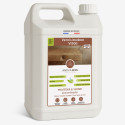
N100 Wood Cleaner
A ready-to-use cleaner for dirty, stained, blackened or oiled wood. It can help prepare a deck before applying new protection.
Discover N100 Wood Cleaner →How to carry out a thorough clean
- Remove dust and debris. Clear away leaves and loose debris, especially from between the boards.
- Test the product first. Try the cleaner on an inconspicuous area, particularly if the wood is old or has several existing finishes.
- Apply it in sections. Use a compatible sprayer, brush or roller, following the product instructions.
- Let it work without drying. For N100, follow the time stated on the instructions; the product generally works for 20 to 30 minutes. If needed, lightly re-wet the surface in accordance with the instructions.
- Brush along the grain. Use a suitable brush and avoid damaging the surface of the wood.
- Rinse thoroughly. If using a pressure washer, keep the nozzle at a distance and choose a pressure suitable for the timber.
- Allow the wood to dry completely. Do not apply a brightener or saturator while the surface is still damp.

For detailed instructions based on the type of dirt and the product to use, see our complete guide to cleaning a wooden deck.
Cleaning a wooden deck: demonstration
Brightening a wooden deck, if needed
Wood turns grey mainly because of exposure to UV rays and weather. This changes the appearance of the deck, but does not in itself mean that the wood is damaged. Use a wood brightener only if you want to restore the colour or achieve a more uniform appearance before applying new protection.
A wood brightener does not replace cleaning: if the deck is dirty, greasy or covered in deposits, clean it first. DG105 Wood Brightener is designed to brighten greyed exterior wood. Follow the product instructions and test it on a small area first.

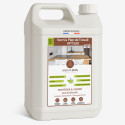
DG105 Wood Brightener
A ready-to-use brightener for greyed decks, cladding and other exterior wood surfaces.
Discover DG105 Wood Brightener →Steps for brightening greyed wood
- Clean first if the wood is dirty. Remove deposits and let excess water drain away before brightening.
- Lightly dampen the wood. Apply the brightener to the prepared surface, following its instructions.
- Apply the product generously. For large surfaces, a compatible sprayer can make application easier.
- Leave it to work for 20 to 30 minutes without letting it dry. Lightly re-wet the surface if necessary, according to the manufacturer’s instructions.
- Brush along the grain. Brushing helps remove dirt and achieve a more even result.
- Rinse thoroughly. Brush along the grain as you rinse, then allow the wood to dry completely.
Protecting a wooden deck with a wood saturator
Once the wood is clean, dry and properly prepared, apply a saturator suitable for the timber species and the deck’s use. It penetrates the wood rather than forming a thick film like varnish. Protection is maintained by renewing the product when the colour starts to fade or the wood looks dull and less protected.
For many decks made from softwood and other compatible timber, ST600 Decking Saturator is designed for horizontal surfaces. To compare the options by timber species and use, read our guide to the best wood saturator.
How to apply a saturator to a deck
- Check the surface and the weather. The wood must be clean and completely dry. Follow the temperature range and conditions stated on the saturator’s technical data sheet.
- Mix the product thoroughly. Stir the saturator carefully before and during application, especially if it is tinted.
- Apply along the grain. Work board by board using a suitable wide brush or roller.
- Apply a thin, even coat. On a previously protected deck, one maintenance coat is generally enough if the wood absorbs it. Follow the technical data sheet for highly absorbent wood or a first application.
- Remove excess product from the surface. The saturator should penetrate the wood. Do not leave puddles, thick patches or a shiny film.
- Let the product dry before walking on the deck. Follow the drying and return-to-use times on the packaging, and protect the surface from rain for the required drying period.

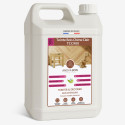
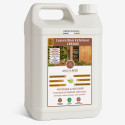
ST600 Decking Saturator
Protection for decks and other compatible exterior wooden floors. Available in several shades, including a clear version.
Discover ST600 Decking Saturator →
Additional preparation
An anti-UV primer can be part of a protection system when the product instructions and the condition of the wood call for it. It does not replace cleaning or drying the surface.
Before applying protection
If the wood is still grey after cleaning and you want to restore its colour, brighten it and let it dry before applying the saturator.

When should you renew the protection?
Do not rely on a fixed schedule alone. Inspect the deck: fading colour, dull-looking wood or a less protected appearance can indicate that maintenance is due. Clean the wood first, let it dry, then apply a thin coat if the surface is ready and absorbs the product.
Avoid applying more saturator to a deck that already has thick patches or sticky areas. First find out why the product was not absorbed, then prepare the surface before applying anything else.
FAQ: maintaining a wooden deck
How often should you clean a wooden deck?
Sweep away debris regularly and clean the deck whenever dirt starts to build up. A more thorough clean may be useful in spring or when the deck is visibly dirty. Adjust the frequency to the deck’s exposure, foot traffic and the deposits on the surface.
Should you use a wood brightener every year?
No. A wood brightener is used to restore the appearance of greyed or dull wood when you want to bring it closer to its original colour. There is no need to use one if the wood has not turned grey.
Can you apply a saturator to a damp deck?
No. The wood must be completely dry to allow the product to penetrate properly and dry as intended. After cleaning or brightening, wait until the surface is fully dry.
How many coats of saturator should you apply to a deck?
On a deck that has already been protected, one thin maintenance coat is generally enough if the wood absorbs it. For a first application or very absorbent wood, follow the instructions for the specific product and timber species.
Can you use a pressure washer?
Yes, but take care. Excessive pressure or holding the nozzle too close can raise the wood fibres and damage the surface. Test first and keep the nozzle at a suitable distance; for many routine maintenance jobs, a brush is preferable.
How can you tell if your deck needs another coat of saturator?
Look for changes in the colour and appearance of the wood. Fading colour or dull-looking boards can indicate that the protection is wearing off. Clean the surface and let it dry before deciding whether another coat is needed.
A clean, protected deck throughout the year
Inspect the wood, clean it according to its condition, brighten it only when necessary and renew its protection when the deck needs it. Effective maintenance starts with a careful assessment of the surface.

Outdoor Wood Advice
Explore our professional advice on protecting and maintaining wooden decks, cladding and other outdoor wood.