
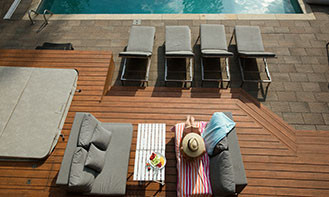
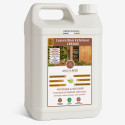


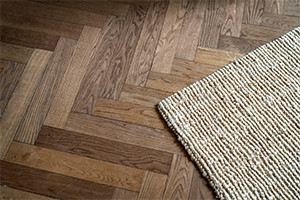
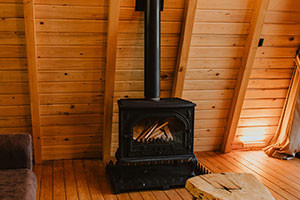


Should you apply one, two or three coats of wood saturator to effectively protect decking, cladding or garden furniture? The number of coats depends on the product used and the type of surface. With Anova Bois wood saturators, the recommendation is straightforward: one coat on decking and two coats on cladding and garden furniture.
This distinction helps you adapt the application to each use while avoiding excess product. Find out why the number of coats varies, how to apply them and which mistakes to avoid for an even, long-lasting finish.
Quick answer: how many coats of wood saturator do you need?
For Anova Bois wood saturators, apply 1 coat to wooden decking, 2 coats to timber cladding and 2 coats to garden furniture or outdoor wooden furniture. These recommendations apply to saturators designed for these uses. Special products for composite materials, thermo-compressed bamboo or charred wood must be applied according to their own instructions.
There is no need to add coats beyond the recommendations: excess saturator can cause shiny patches, drying problems or a sticky finish.
1. How many coats of wood saturator should you apply?
A wood saturator is a finish designed to protect wood against outdoor exposure while preserving its natural appearance. Unlike paint or film-forming varnish, a traditional saturator is designed to penetrate the surface fibres of the wood without forming a thick film.
The correct number of coats therefore depends on the formulation and intended use. You should not assume that an extra coat always provides better protection.
One coat: the Anova Bois recommendation for decking
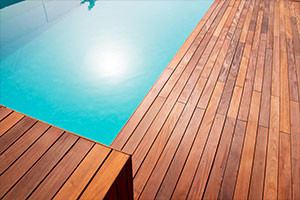
For wooden decking, Anova Bois recommends just one coat of wood saturator. The aim is to impregnate the wood with the right amount of product without leaving excess on a surface exposed to regular foot traffic.
This recommendation applies in particular to softwood decking treated with ST600 Decking Saturator, as well as hardwood decking treated with a compatible saturator. Always follow the instructions for the specific product selected.
Even application helps preserve a natural appearance and reduces the risk of sticky or shiny patches.
Two coats: the recommendation for timber cladding
For timber cladding, Anova Bois recommends two coats of wood saturator. Applying the product in two passes helps achieve an even finish on vertical surfaces while respecting the quantities and conditions specified by the manufacturer.
Spread the product evenly and follow the application procedure. Two thin, properly applied coats do not mean two thick coats.
Two coats: also recommended for garden furniture
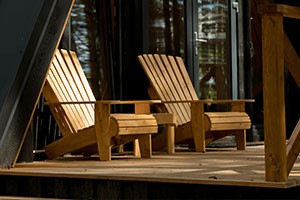
For wooden garden sets and outdoor furniture, Anova Bois also recommends two coats. Tables, chairs, benches and other furniture often have several faces, joints and areas exposed to moisture.
Carefully coat all accessible surfaces, avoiding product build-up in corners and on seating surfaces.
Three coats: generally unnecessary
A third coat is not recommended as a general rule. When the amount of product exceeds the wood's absorption capacity, the saturator may remain on the surface and cause finish defects.
For Anova Bois wood saturators, follow the recommendation for the surface concerned unless the product technical data sheet specifies otherwise.
2. Summary table: how many coats for each surface?
The following table summarises Anova Bois application recommendations for the main types of outdoor wooden surfaces.
| Surface | Recommended number of coats | Application advice |
|---|---|---|
| Pine or other softwood decking | 1 coat | Apply one even coat without excess |
| Douglas fir or larch decking | 1 coat | Choose a saturator compatible with the wood species |
| Ipé, cumaru, teak or other exotic hardwood decking | 1 coat | Take particular care not to overload dense woods |
| Pressure-treated timber decking | 1 coat | Check that the wood is sufficiently dry |
| Pine or other softwood cladding | 2 coats | Apply two thin, even coats |
| Douglas fir or larch cladding | 2 coats | Follow the procedure for the selected saturator |
| Exotic hardwood cladding | 1 to 2 coats | Avoid build-up on less absorbent areas |
| Wooden garden furniture sets | 2 coats | Pay attention to joints and seating surfaces |
| Outdoor wooden furniture | 2 coats | Coat all accessible faces evenly |
| Composite wood, thermo-compressed bamboo, charred wood | As specified in the technical data sheet | Use a special product compatible with the material |
These recommendations apply to the initial protection treatment with Anova Bois wood saturators. The number of coats needed for maintenance may differ depending on the condition of the surface and the product instructions.
Key takeaway: at Anova Bois, the general rule is 1 coat for decking, 2 coats for cladding and 2 coats for garden furniture. The wood species mainly determines the choice of formulation and preparation precautions.
3. How many coats of wood saturator for different wood species?
Wood density and porosity affect how much saturator is absorbed. However, this does not mean you should automatically increase the number of coats. With Anova Bois saturators, always start by following the recommendation for the type of surface.
How many coats on pine?
Pine is a softwood whose absorption varies with treatment, drying and surface condition. For pine decking, apply one coat of ST600 Decking Saturator. For pine cladding, apply two coats of SB600 Cladding Saturator. For pine furniture, two coats of a suitable furniture saturator are recommended.
High absorption alone does not justify applying more coats than specified in the product instructions.
How many coats on Douglas fir?
Douglas fir has a naturally pinkish colour and may be relatively non-absorbent when new or very smooth. Suitable preparation is important to allow the product to penetrate properly.
With a compatible Anova Bois saturator, the recommendation is one coat on Douglas fir decking and two coats on Douglas fir cladding. SD600 Douglas Fir Saturator is designed for this species; consult its instructions for detailed application conditions.
How many coats on larch?
Larch is used for both decking and cladding. Its absorption can vary between different areas of the wood and according to surface preparation.
With a suitable Anova Bois saturator, allow for one coat on larch decking and two coats on larch cladding. SM600 Larch Saturator is specifically designed for this wood species.
How many coats on exotic hardwood?
Exotic hardwoods such as ipé, cumaru and teak are often very dense and have limited absorption. It is therefore especially important not to leave excess saturator on the surface.
For exotic hardwood decking, Anova Bois recommends just one coat of a compatible saturator. For exotic hardwood cladding, the recommendation is two coats, following the specified application method and quantities.
SBE600 Exotic Wood Saturator, as well as the dedicated SI600 Ipé, SC600 Cumaru and SK600 Teak saturators, allow you to choose a formulation suited to the species.
How many coats on pressure-treated wood?
Pressure-treated timber may retain significant moisture after treatment. Before applying a saturator, check that the wood is sufficiently dry and that its surface is ready to receive a finish.
For pressure-treated decking, Anova Bois recommends one coat. For pressure-treated cladding, the recommendation is two coats, using a compatible product such as SBA600 Pressure-Treated Wood Saturator.
4. How many coats for decking, cladding or garden furniture?
Wooden decking: just one coat
Decking is exposed to rain, sunlight, repeated foot traffic and temperature changes. Nevertheless, adding several coats of saturator does not necessarily improve its protection.
Anova Bois recommends just one coat of saturator on decking. Apply it evenly along the wood grain without allowing product to accumulate.
ST600 Decking Saturator is designed for softwood decking, while products suited to exotic hardwoods, Douglas fir, larch and pressure-treated timber can be used for other wood species.

On decking, do not leave puddles of product in grooves or high-traffic areas. An overly generous coat may dry poorly and create differences in sheen.
Timber cladding: two coats
Cladding is exposed to UV rays, driving rain and changing weather conditions. For these vertical surfaces, Anova Bois recommends two coats of wood saturator.
Apply the first coat evenly. Apply the second according to the conditions and waiting time specified in the technical data sheet, without overloading areas that are already less absorbent.
SB600 Cladding Saturator is designed for compatible timber cladding. Dedicated formulations are also available for Douglas fir, larch and exotic hardwoods.

Garden furniture and outdoor wooden furniture: two coats
Garden furniture is exposed to weather, dirt and frequent handling. Its different faces and joints require careful application.
For garden furniture, Anova Bois recommends two coats of wood saturator. SJ600 Garden Furniture Saturator is intended for compatible wooden furniture.
Apply each coat thinly, covering accessible surfaces and avoiding build-up on tabletops, seats and in corners.

5. Why does wood absorption still matter?
Even when the manufacturer specifies the number of coats, the wood's absorption capacity plays a major role in the quality of the result.
Porous wood may absorb saturator quickly, while very dense, damp or machine-burnished wood may prevent it from penetrating. Proper preparation helps reduce these differences.
How can you recognise poorly absorbent wood?
- The saturator remains on the surface and forms persistently wet patches.
- The product collects in grooves or joints.
- Shiny marks or a greasy feel appear after application.
- An existing finish prevents the product from penetrating.
In these situations, do not try to compensate by adding another coat. First check the surface condition, preparation and product compatibility.
What if the wood absorbs the product very quickly?
Rapid absorption does not automatically mean you need a third coat or should double the recommended quantity. Follow the number of coats specified by Anova Bois for the surface and the coverage rates stated in the technical data sheet.
Essential point: absorption helps you adjust your application technique and the quantity used. It does not replace the manufacturer's instructions on the number of coats.
6. Why should you avoid applying three coats of wood saturator?
It may seem logical that applying more coats will protect wood better. However, this reasoning does not apply to non-film-forming saturators.
Once the wood has received the intended amount of product, an extra coat may remain on the surface instead of penetrating properly.
Main risks of overapplication
- A sticky feel: excess product may struggle to dry.
- Shiny patches: product build-up can spoil the desired matt appearance.
- Colour variations: heavily coated areas may become darker.
- An uneven finish: marks may appear on boards or panels.
- Unnecessary product consumption: using more product does not guarantee better protection.
With Anova Bois saturators, therefore, apply one coat to decking and two coats to cladding and garden furniture, unless the instructions for a particular product state otherwise.
7. How to apply the recommended number of coats correctly
Step 1: prepare the surface
The wood must be clean, sufficiently dry and free from incompatible old finishes. Greyed or dirty wood may require cleaning and, where appropriate, a wood brightening treatment.
Old paint, varnish or film-forming wood stain can prevent the saturator from penetrating. Prepare the wood according to the manufacturer's recommendations.
Step 2: stir the saturator
Stir the product thoroughly before and during application, particularly if it contains pigments. This helps achieve an even colour.
Step 3: apply the first coat
Apply the saturator using a brush, wide flat brush or the tool recommended in the technical data sheet, working along the wood grain.
Spread the product evenly and avoid build-up. On decking, this single coat is the application recommended by Anova Bois.
Step 4: apply the second coat to cladding and furniture
For cladding and garden furniture, apply a second coat according to the product instructions, respecting the specified drying conditions and quantities.
Do not confuse the number of coats with the waiting time between applications. For more on this, read our dedicated article: How long should you wait between two coats of wood saturator?
Step 5: allow to dry before use
After the final coat, follow the drying and return-to-service times specified in the technical data sheet. Weather conditions, humidity and temperature can affect actual drying times.
For decking and furniture seats, avoid using the surface too early, as this could mark the finish.
8. How many coats of wood saturator are needed for maintenance?
The number of coats used for initial protection is not always the same as the number needed for maintenance.
On previously treated wood, some of the finish may still be present. Maintenance aims to renew protection when necessary without unnecessarily building up product.
On previously saturated decking
After cleaning and preparation, one maintenance coat is generally sufficient when the product and condition of the wood allow it. Always follow the maintenance instructions for the specific product.
On previously saturated cladding
The initial Anova Bois application involves two coats. For maintenance, the number depends on the condition of the finish and the product instructions. Do not assume that two coats must always be reapplied during every renovation.
On previously saturated garden furniture
As with cladding, the recommended initial application is two coats. During maintenance, start by cleaning and assessing the wood, then follow the saturator's recoating instructions.
If the wood is heavily greyed, blackened or covered in deposits, correct these issues before applying more product. Several coats of saturator will never replace proper preparation.
9. Common mistakes to avoid when applying wood saturator
Applying two coats to decking with Anova Bois products
For the relevant Anova Bois saturators, the recommendation is just one coat on decking. Applying a second coat out of habit may result in excess product.
Applying only one coat to cladding
Anova Bois recommends two coats for cladding. Applying only one coat therefore does not follow the recommended procedure for these surfaces.
Applying only one coat to garden furniture
According to Anova Bois recommendations, wooden garden furniture sets and outdoor furniture require two coats. Make sure all accessible faces are properly covered.
Assuming three coats provide better protection
With a non-film-forming saturator, an additional coat that is not recommended may cause defects without improving protection.
Applying coats that are too thick
Two thin coats do not mean two heavily loaded applications. Follow the manufacturer's coverage rates and instructions to avoid excessive build-up.
Forgetting about special products
Products for composite wood, thermo-compressed bamboo or charred wood do not necessarily follow the same instructions as conventional saturators. Their technical data sheets take priority.
10. Frequently asked questions about the number of coats of wood saturator
Should you apply one or two coats of wood saturator?
With Anova Bois saturators, apply one coat to decking and two coats to cladding or garden furniture. For other manufacturers, consult the product recommendations.
Is one coat of wood saturator enough?
Yes. For decking treated with compatible Anova Bois saturators, just one coat is recommended.
Why apply two coats of saturator to timber cladding?
Anova Bois recommends two coats for cladding to follow its protection procedure and achieve an even finish. Respect the recommended quantities and waiting time between coats.
How many coats of saturator does garden furniture need?
Anova Bois recommends two coats for wooden garden furniture and outdoor furniture, using a product compatible with the wood species.
How many coats on pine decking?
Anova Bois recommends one coat of ST600 Decking Saturator on properly prepared pine decking.
How many coats on ipé decking?
One coat of a compatible saturator is recommended for ipé decking, following the technical data sheet for the selected product.
How many coats on Douglas fir cladding?
Anova Bois recommends two coats for Douglas fir cladding, using a saturator suited to this species.
How many coats on larch cladding?
Two coats of a suitable saturator are recommended for larch cladding.
Can you apply three coats of wood saturator?
Three coats should not be applied as a general rule. With Anova Bois saturators, apply one coat to decking and two to cladding and furniture, unless the specific product instructions state otherwise.
Will a second coat make the wood darker?
A second coat may deepen the colour depending on the formulation, wood species and absorption. Always test on a small area first to check the appearance.
Why does my wood saturator remain sticky?
A sticky finish may result from overapplication, inadequate surface preparation or unfavourable drying conditions. Check the instructions and avoid adding more product.
How many coats of saturator on new wood?
The number of coats depends on the surface and product. With Anova Bois, plan for one coat on new decking and two coats on new cladding or furniture, after suitable preparation.
How many coats are needed to maintain decking?
One maintenance coat is often enough on previously saturated decking, after cleaning and in accordance with the technical data sheet.
Do you need two coats to maintain cladding?
Not necessarily. The two-coat recommendation applies to the initial treatment. For maintenance, follow the saturator instructions and consider the condition of the wood.
How long should you wait between two coats?
The waiting time depends on the saturator and application conditions. Consult the Anova Bois guide on waiting times between coats for more details.
Conclusion: how many coats do you need to protect wood effectively?
The number of coats should not be chosen at random. It depends on the product and the surface to be protected. For Anova Bois saturators, the recommendation is clear: one coat on decking, two coats on cladding and two coats on garden furniture.
This method follows the recommended protection procedures while avoiding unnecessary applications and the risks of excessive build-up.
Finally, choosing a saturator suited to the wood species, preparing the surface and respecting the application conditions are all essential for a satisfactory result.
Which wood saturator should you use for your project?
Explore Anova Bois wood saturators for decking, cladding and outdoor furniture, then consult the application advice for each product.