
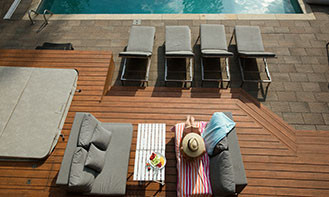





Over time, a wooden deck accumulates dust, leaves, dirt and sometimes green deposits or black stains. Exposure to sunlight and the weather can also cause the wood to turn grey. To restore a clean deck without damaging the wood fibres, it is essential to use the right cleaning method and suitable products.
Should you use black soap, a specialist wood cleaner, a wood brightener or a pressure washer? How should you clean pine, Douglas fir or exotic hardwood decking? And what mistakes should you avoid to preserve its natural appearance?
In this guide, discover every step needed to clean a wooden deck effectively, select the right products for its condition and extend its lifespan.
How to clean a wooden deck in 5 steps
- Sweep the deck to remove leaves, dust and debris.
- Identify the problem: ingrained dirt, black spots, green deposits or greying.
- Apply a suitable product: black soap for routine maintenance, wood cleaner for stubborn dirt or a wood brightener for greyed wood.
- Scrub along the wood grain, then rinse thoroughly with clean water.
- Allow to dry and, if necessary, renew the protection with a suitable wood saturator.
Key point: cleaning removes dirt, while wood brightening addresses the colour change caused by weathering. These are two different treatments.

1. Why should you clean a wooden deck regularly?
A wooden deck is constantly exposed to outdoor conditions. Rain, UV rays, moisture, pollen, fallen leaves and foot traffic gradually contribute to dirt build-up.
Over time, several problems may develop:
- Surface dirt: dust, soil, pollen, shoe marks and plant debris.
- Green deposits: algae and other organisms that thrive in damp, shaded areas.
- Black spots: ingrained dirt or microorganisms growing on the surface.
- Greying: a natural change in the wood's colour caused by UV exposure and weathering.
- Localised stains: barbecue grease, drinks, rust or reactions involving tannins.
Regular maintenance keeps the surface cleaner, limits the build-up of slippery deposits and prepares the wood properly before applying a new coat of saturator.
Cleaning is also an opportunity to inspect the overall condition of your deck: fixings, damaged boards, splinters, standing water and inadequate ventilation.
2. When and how often should you clean a wooden deck?
For a deck with normal exposure, one or two thorough cleanings per year are generally a good starting point.
However, the frequency should be adjusted to the surroundings.
Spring: the main cleaning session
Spring is often the ideal time to clean your deck thoroughly.
After autumn and winter, the boards may be covered in organic deposits, black marks and dirt accumulated during damp weather.
Spring cleaning restores a clean surface before warmer weather and prepares the deck for a possible application of wood saturator.
Autumn: preventive cleaning
A second cleaning can be useful in autumn, particularly if your deck is beneath trees or in a damp environment.
Regularly remove fallen leaves and debris that trap moisture against the wood.
For heavily shaded decks
North-facing decks, decks surrounded by plants or areas with poor ventilation may need more frequent cleaning.
In these conditions, act before green deposits become extensive and the surface turns slippery.
Tip: do not wait until your deck is heavily blackened before cleaning it. Light, regular maintenance is generally easier than a complete renovation.
3. Which product should you use to clean wooden decking?
Your choice of cleaner mainly depends on the condition of the wood and the type of dirt.
A mild product may be sufficient for routine maintenance, while heavily soiled decking requires a stronger cleaner. If the wood has simply turned grey from sunlight, a wood brightener is usually more appropriate.
| Deck condition | Recommended product | Purpose |
|---|---|---|
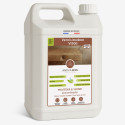
| Dust and light dirt | Black Soap SN800 | Regular maintenance and gentle cleaning |
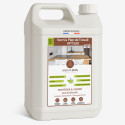
| Dirty or blackened decking | Wood Cleaner N100 | Remove dirt and superficial black deposits |
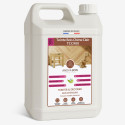
| Heavily soiled decking | Concentrated Cleaner N140 | Deep cleaning and degreasing |
| Decking that has turned grey | Wood Brightener DG105 | Restore a colour closer to the wood's original shade |
| Grey and blackened decking | N100 or N140, followed by DG105 if necessary | Remove dirt before brightening the wood |
Black soap for routine maintenance
Black soap is a useful option for regularly cleaning wooden decking that is only lightly soiled.
It removes dust and light dirt without always needing a stronger cleaning product.
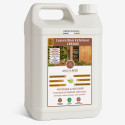
Anova Bois Black Soap SN800 can be diluted in warm water according to its instructions for use.
It is particularly suitable for decks that receive regular maintenance and show no significant blackening.
Wood Cleaner N100 for dirty or blackened decking
Wood Cleaner N100 is a ready-to-use product designed to remove dirt and black deposits from wooden surfaces.
It is particularly useful for decks exposed to moisture or affected by ingrained organic marks.
Apply by spraying, brushing or rolling, allow the recommended contact time and rinse thoroughly.
Concentrated Cleaner N140 for deep cleaning
Concentrated Cleaner N140 is suitable for heavily soiled decking, stubborn dirt and situations requiring intensive cleaning.
Its concentrated formula must be diluted according to the manufacturer's instructions and the level of soiling.
It can also be used in certain renovation processes to remove residues from old non-film-forming finishes.
Important precaution: N140 is a powerful cleaner. Wear the protective equipment specified on its label, protect sensitive surrounding surfaces and strictly follow its technical data sheet.
Wood Brightener DG105 to restore the wood's colour
Wood Brightener DG105 does not perform exactly the same function as a conventional cleaner.
It is designed to address superficial greying caused by exposure to UV rays and the weather.
It can be used on decking that has lost its natural colour, after cleaning if the surface is also dirty.
DG105 is ready to use and must be applied in accordance with the precautions in its technical data sheet.
4. How to clean a wooden deck step by step
For an even result without damaging the wood fibres, follow a clear cleaning process.
Step 1: Clear and sweep the deck
Start by removing garden furniture, flowerpots, rugs and other objects from the deck.
Sweep the entire surface thoroughly to remove fallen leaves, soil, dust and debris.
Pay particular attention to gaps between boards and hard-to-reach areas where dirt can trap moisture.
Take this opportunity to check the fixings and identify damaged boards.
Step 2: Identify the type of dirt
Inspect the surface before applying any product.
- If the wood is simply dusty, gentle cleaning may be sufficient.
- If there are black spots or stubborn marks, choose a specialist wood cleaner.
- If the wood has turned uniformly grey, use a wood brightener to restore its colour.
- If several issues are present, work in stages rather than applying several products at once.
Step 3: Prepare the cleaning product
Choose the appropriate cleaner and prepare it according to its technical data sheet.
Cleaner N100 is ready to use. Cleaner N140 requires suitable dilution.
For N140, a dilution of one part product to three parts water is among the recommendations provided by Anova Bois for routine deck cleaning. Always check the latest instructions on the packaging.
Protect sensitive items around the deck, especially metals, certain painted surfaces and plants exposed to splashes.
Never mix different cleaning products together.
Step 4: Apply the cleaner to the wood
Apply the product using a compatible low-pressure sprayer, brush or roller.
Work in sections for an even application and to prevent the product from drying on the surface before rinsing.
For Cleaners N100 and N140, the contact time stated in the technical data sheets is generally 20 to 30 minutes, without allowing the product to dry.
Always follow the instructions for the specific product, as contact times may vary depending on its formulation.
Step 5: Scrub along the grain
Use a deck scrubbing brush suitable for wood to loosen dirt.
Brush along the grain with even pressure.
Avoid wire brushes or excessively abrasive tools, which can scratch the wood, raise the grain and leave metal particles that may cause stains.
On softer woods such as pine, Douglas fir and larch, use moderate brushing pressure.
Step 6: Rinse thoroughly
Rinse the deck with clean water to remove loosened dirt and cleaning product residues.
Rinsing with a garden hose while brushing is a gentle method for many wood species.
A pressure washer may be considered on certain surfaces with suitable precautions, but it is not essential.
Dispose of or direct rinse water in accordance with the precautions for the product used.
Step 7: Allow the deck to dry
After cleaning, allow the wood to dry naturally.
If you plan to apply a wood saturator, wait until the surface is sufficiently dry and meets the moisture requirements specified by the manufacturer.
A minimum drying time of 24 hours may be specified for certain cleaners, but longer may be necessary depending on the weather, wood species and ventilation.
Professional tip: clean in mild weather, avoiding frost and extreme heat. Avoid direct, strong sunlight to prevent cleaning products from drying too quickly on the wood.
5. How to clean blackened or green wooden decking
A deck that turns black or green is often exposed to significant moisture and a build-up of organic matter.
These issues are particularly common on shaded, poorly ventilated decks or those beneath trees.
Cleaning a deck with black spots
Black spots may have several causes: ingrained dirt, surface mould, reactions with certain metals or deteriorating old finishes.
When the marks are superficial organic deposits, Cleaner N100 or Concentrated Cleaner N140 may be suitable.
Apply the cleaner, allow the recommended contact time, scrub along the grain and rinse thoroughly.
If the marks persist, identify their cause before repeating the treatment.
Cleaning a deck that has turned green
Green deposits mainly develop in damp, shaded environments.
Start by removing surface deposits with a suitable brush and water.
If the dirt remains, use a wood-compatible cleaner appropriate for the type of deposit.
For persistent biological contamination, a specific treatment authorised for that purpose may be necessary. A degreasing cleaner should not automatically be regarded as a biocidal treatment.
After cleaning, improve water drainage and ventilation around the deck where possible to reduce recurrence.
How to prevent your deck from turning black again
- Remove leaves and debris regularly.
- Avoid leaving damp objects permanently on the boards.
- Watch for areas where water pools.
- Maintain good airflow beneath the deck.
- Clean as soon as superficial deposits appear.
- Maintain the protective finish when necessary.
6. How to clean greyed wooden decking
A grey wooden deck is not necessarily dirty.
Greying is a natural process caused by the surface degradation of certain wood components under sunlight, water and weather exposure.
Conventional cleaning can remove dust and dirt but does not always restore the wood's original colour.
Use a wood brightener to restore the colour
For decking that has turned grey, Wood Brightener DG105 helps remove the superficial grey appearance.
The recommended method is to:
- Clean the wood first if it is dirty.
- Lightly dampen the surface.
- Apply a generous amount of ready-to-use wood brightener.
- Leave for approximately 20 to 30 minutes without allowing it to dry.
- Brush along the wood grain.
- Rinse thoroughly with clean water.
- Allow to dry before considering a new finish.
The result depends on the wood species, its degree of weathering and its surface condition.
Brightening generally restores a shade closer to the wood's original colour but does not guarantee an appearance identical to brand-new decking.

Do you always need to brighten a wooden deck?
No. If you like the natural grey patina of your deck and the wood is sound, there is no need to systematically restore its original colour.
Regular cleaning may be sufficient to maintain a clean surface.
Wood brightening is especially useful when you want to restore a warmer appearance before applying a suitable finish.
7. How to clean decking made from different wood species
The cleaning method should also take the type of wood into account. Some species are softer and more sensitive to abrasion, while others are dense or contain natural substances that affect their behaviour.
Cleaning pine decking
Pine is a relatively soft softwood. Gentle cleaning with a deck brush and garden hose is therefore preferable.
Avoid overly abrasive brushes and close-range pressure washing, which can raise the wood fibres.
For heavily soiled pine decking, use a suitable cleaner and rinse carefully.
Cleaning Douglas fir decking
Douglas fir can be sensitive to overly aggressive mechanical cleaning.
Moderate brushing along the grain is generally preferable.
If the wood has blackened, a suitable wood cleaner can be used. For uniform greying, a wood brightener can restore a colour closer to the original shade.
Cleaning larch decking
Larch also requires care, particularly to avoid raising the wood grain.
Use a suitable brush and a product compatible with softwoods.
For greyed decking, wood brightening may be considered after cleaning.
Cleaning ipé decking
Ipé is a very dense tropical hardwood commonly used for outdoor decking.
Its density does not make it immune to scratches or damage from excessive cleaning.
For routine maintenance, cleaning with water and black soap may be sufficient.
For black stains or ingrained dirt, a suitable wood cleaner can be used after testing on a small area.
If the deck has turned grey, a wood brightener may help revive its colour.

Cleaning cumaru or teak decking
Cumaru and teak are tropical hardwoods whose maintenance should take into account the characteristics of each species and the existing finish.
For light maintenance, choose gentle cleaning.
If the wood has blackened, a specialist wood cleaner may be necessary. If it has only turned grey, a wood brightener is more appropriate.
Always test on an inconspicuous area before treating the entire deck.
Cleaning pressure-treated decking
Pressure-treated wood has received a preservative treatment, but it remains exposed to dirt and aesthetic weathering.
Clean it without unnecessarily damaging the wood fibres.
Prefer a deck brush and garden hose, particularly for treated pine boards.
8. Can you clean a wooden deck with a pressure washer?
Yes, a pressure washer can be used on certain woods, but considerable care is required.
A jet that is too powerful or too close can tear surface fibres, create grooves, raise the grain and cause uneven weathering.
Precautions to follow
- Use moderate pressure appropriate for the wood species.
- Keep a sufficient distance between the nozzle and the wood.
- Use a wide spray rather than a concentrated jet.
- Work along the grain.
- Do not hold the jet stationary in one place.
- Always test on a less visible area.
A distance of around 50 cm is often recommended as a starting point, but this alone does not guarantee that damage will be avoided: pressure, nozzle type and wood hardness are also important.
Which woods are most sensitive?
Relatively soft woods, including pine, Douglas fir and larch, are particularly sensitive to excessive pressure washing.
For these species, cleaning with a deck brush is often preferable.
Warning: never use a rotary nozzle or highly concentrated jet directly on deck boards. Excessive pressure can permanently damage the wood surface.
9. How to remove stains from wooden decking
Grease and oil stains
Grease stains from barbecues or meals should be treated promptly.
First, absorb the excess with an absorbent material without spreading the grease.
Then use a wood-compatible degreasing cleaner, such as N100 or N140, depending on the severity of the stain and the application recommendations.
Old stains that have penetrated deeply into the fibres may require repeated treatment or localised mechanical preparation.
Food and drink stains
For fresh stains, start with gentle cleaning using water and black soap.
If the stain persists, use a specialist wood cleaner after testing a small area.
Black stains caused by tannins
On certain tannin-rich woods, dark stains can develop following contact with metal objects or a chemical reaction.
These marks are not necessarily mould and may not disappear with a conventional cleaner.
A product specifically designed for tannin stains or localised surface preparation may be necessary.
Rust stains
Rust stains should be treated carefully.
An unsuitable rust remover can discolour wood or react with its natural components.
Avoid improvised mixtures and choose a treatment compatible with the wood species and existing finish.
10. Mistakes to avoid when cleaning a wooden deck
Using bleach
Bleach is not recommended for routine wooden deck maintenance.
It can alter the appearance of certain wood species, damage some finishes and pose risks to plants and the environment.
Never mix it with other household or cleaning products.
Using a wire brush
A wire brush can scratch wood and leave metal particles that may cause reactions or stains.
Choose a non-metallic brush suited to the hardness of the wood.
Using an excessively powerful pressure washer
An overly aggressive jet can raise fibres and create a rough surface, particularly on softer woods.
Allowing the cleaner to dry on the wood
Cleaners that require contact time should generally remain wet until rinsing.
Avoid working in direct sunlight or on an excessively hot surface.
Confusing cleaning with wood brightening
A cleaner does not always replace a wood brightener. If your deck has turned grey due to UV exposure, the right product depends on the appearance you want to achieve.
Applying saturator to damp wood
After cleaning, allow the wood to dry sufficiently before applying a finish.
Excessive moisture can interfere with absorption and the quality of the result.
Using harsh homemade mixtures
Mixtures containing acidic, alkaline or oxidising products may cause unexpected reactions with the wood and its finishes.
It is preferable to use a product with clearly stated compatibility and instructions for use.
11. What should you do after cleaning a wooden deck?
Cleaning removes dirt, but it does not, by itself, provide long-lasting protection against UV rays and moisture.
If your deck is exposed to the weather and you want to preserve its colour, applying a suitable wood saturator may be beneficial.
Why apply a wood saturator after cleaning?
An outdoor wood saturator helps limit water penetration and, when suitably pigmented, slows UV-induced greying.
It also preserves a natural appearance without creating the thick film associated with some other finishes.
Which wood saturator should you choose after cleaning?
The choice depends on the wood species:
- Pine and other softwoods: Decking Saturator ST600.
- Douglas fir: Douglas Fir Saturator SD600.
- Larch: Larch Saturator SM600.
- Tropical hardwoods: Exotic Wood Saturator SBE600.
- Ipé: Ipé Saturator SI600.
- Cumaru: Cumaru Saturator SC600.
- Teak: Teak Saturator SK600.
- Pressure-treated wood: Pressure-Treated Wood Saturator SBA600.
For decking, Anova Bois recommends just one coat of wood saturator, applied to clean, dry and properly prepared wood, subject to any specific instructions for the chosen product.
Applying additional coats is not necessary to improve protection.
Should you protect your deck after every cleaning?
No. A new application of saturator is not automatically required after every wash.
If the existing finish is still in good condition, cleaning alone may be sufficient.
Renew the protection when its condition justifies it, particularly if the colour has faded or water repellency has decreased, while following the manufacturer's recommendations.
Need to clean and restore your wooden deck?
Discover Anova Bois decking cleaning solutions and advice on choosing a product suited to your wood's condition.
12. Frequently asked questions about cleaning wooden decking
What is the best product for cleaning a wooden deck?
The best product depends on the wood's condition. For routine maintenance, black soap is often sufficient. For dirty or blackened decking, a specialist wood cleaner such as N100 or N140 is more suitable. For greyed decking, choose a wood brightener.
How can you clean wooden decking naturally?
For light dirt, warm water and black soap combined with gentle brushing offer a simple solution. However, this may not replace a specialist cleaner for heavy soiling.
Can you clean wooden decking with black soap?
Yes. Black soap is suitable for regular maintenance of lightly soiled decking. Dilute it correctly and rinse to avoid leaving residues.
How do you clean a very dirty wooden deck?
Sweep the deck, apply a suitable specialist wood cleaner, allow it to work according to its technical data sheet, brush along the grain and rinse thoroughly. Repeat if necessary.
How do you clean a wooden deck that has turned black?
First identify the cause of the blackening. For superficial organic dirt, use a wood cleaner such as N100 or N140. Tannin stains or reactions with metals may require a different treatment.
How do you remove green deposits from wooden decking?
Brush away superficial deposits, then use a product suited to their nature. Rinse carefully and reduce areas of standing moisture to help prevent recurrence.
How do you clean wooden decking without a pressure washer?
Use a deck brush, a suitable cleaner and a garden hose. This method is particularly useful for softer woods and helps limit the risk of fibre damage.
Can a pressure washer damage wood?
It can damage wood if the pressure is too high, the jet is too close or the nozzle is unsuitable. Manual cleaning is often preferable for softwood species.
How do you clean tropical hardwood decking?
Start with gentle cleaning. For heavy soiling, use a cleaner compatible with the wood species and rinse thoroughly. Avoid overly aggressive mechanical methods.
How can you restore the original colour of wooden decking?
When wood has turned grey due to UV exposure, a wood brightener such as DG105 can help restore a shade closer to its original colour. Results depend on the species and surface condition.
What is the difference between cleaning and brightening wooden decking?
Cleaning removes dirt and deposits from the wood. Brightening aims to correct the grey appearance caused by outdoor weathering. The two treatments can complement each other.
Can you use white vinegar on wooden decking?
White vinegar is not recommended as a universal solution. Its acidity can alter the appearance of certain woods or finishes. Choose a wood-compatible product and test first.
Can you clean wooden decking with bleach?
Bleach is not recommended for routine maintenance. It can change the wood's appearance and pose risks to surrounding materials and plants.
How many times a year should you clean a wooden deck?
One or two thorough cleanings per year are generally sufficient. Shaded, damp decks or those surrounded by plants may need more frequent attention.
What is the best time of year to clean your deck?
Spring is generally a good time for thorough cleaning. A second clean in autumn may help remove accumulated deposits.
How long should wooden decking dry after cleaning?
Drying time depends on the wood species, weather and ventilation. Before applying a saturator, the wood must be sufficiently dry according to the chosen finish's recommendations.
Should you sand a wooden deck after cleaning?
Not necessarily. Localised sanding may be useful if fibres have been raised or some areas are damaged. For a deck in good condition, cleaning may be enough.
Should you apply a saturator after cleaning a wooden deck?
Not necessarily after every cleaning. If the existing protection is still effective, there is no need to reapply saturator immediately. Renew it when the condition of the finish requires it.
Conclusion: how to clean a wooden deck effectively
To clean a wooden deck properly, the first step is to identify its condition and the type of dirt present.
Gentle cleaning with black soap is often sufficient for routine maintenance. However, heavily soiled or blackened decking may require a specialist wood cleaner such as N100 or N140. If the wood has simply turned grey due to sunlight, a wood brightener such as DG105 is a more suitable solution.
Whatever the wood species, favour brushing along the grain, thorough rinsing and a method that respects the surface.
Finally, remember that regular cleaning and good moisture management are essential for keeping a deck clean and pleasant to use.
A well-maintained deck requires fewer major interventions and retains its attractive appearance more easily throughout the seasons.