




The complete guide to choosing the right protection for your decking, cladding or garden furniture.
Choose · Apply · Protect · MaintainThere is no single best wood saturator for every situation.The best choice depends on the wood species, exposure, intended use and desired appearance. For decking, choose a non-film-forming saturator suitable for horizontal surfaces; for cladding, look for pigmented UV protection; for dense exotic hardwoods, select a formula compatible with their low porosity.
This guide covers technical selection criteria, application tips and common mistakes to help you make an informed choice.
What is the best wood saturator for your project?
The best saturator is the one suited to the surface's requirements. Decking exposed to regular foot traffic does not have exactly the same needs as vertical cladding or outdoor furniture.
Easy maintenance
Choose a non-film-forming finish suitable for horizontal surfaces and outdoor weather conditions.
UV protection
Choose a formula suitable for vertical surfaces, preferably pigmented if you want to limit greying.
A pleasant finish
Look for compatibility with the wood species, proper drying and easy maintenance.
How can you identify a good wood saturator?
An effective saturator must suit the wood and its environment. Here are the key features to consider.
Penetration
A non-film-forming formula penetrates the wood without creating a thick, rigid surface film, making future renovation easier.
Water repellency
It limits water penetration into the surface fibres without making the wood completely waterproof.
UV resistance
Pigments help slow surface deterioration and greying caused by sunlight.
Compatibility
Wood density, porosity, extractives and previous treatments all influence the choice.
Application
An even coat, appropriate coverage and suitable weather conditions help prevent many defects.
Maintenance
A non-film-forming finish often allows renovation without complete stripping, provided the surface is sound.

What is the best saturator for wooden decking?
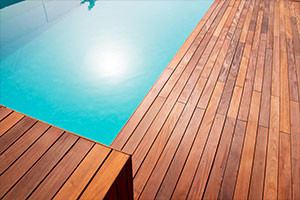
Choose a non-film-forming saturator suitable for horizontal surfaces.Decking is exposed to sunlight, rain, cleaning and abrasion from foot traffic.
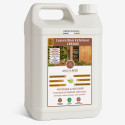
For softwoods and other compatible species, theST600 Decking Saturatoris an Anova Bois option. For dense exotic hardwoods such as ipé or cumaru, choose a suitable formula such as theSBE600 Exotic Wood Saturator.
A pigmented finish is generally preferable in areas with strong sun exposure to help reduce greying.
Explore our wood saturatorsWhich saturator should you choose for exterior wood cladding?
A cladding saturator must be compatible with the wood species and suitable for prolonged exposure to UV rays and the weather.Vertical surfaces experience less abrasion than decking but can be heavily exposed to sunlight and driving rain.
To retain a natural wood appearance, a pigmented, non-film-forming finish is a good option. A film-forming wood stain may also be suitable if that is the finish you want.


Which saturator should you choose for garden furniture?
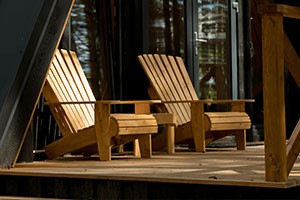
For tables, benches or chairs, choose a saturator suited to the wood species and outdoor use, with a non-sticky finish once dry.
Exotic hardwood furniture may require a specific formulation; softwoods have different requirements depending on their preparation.
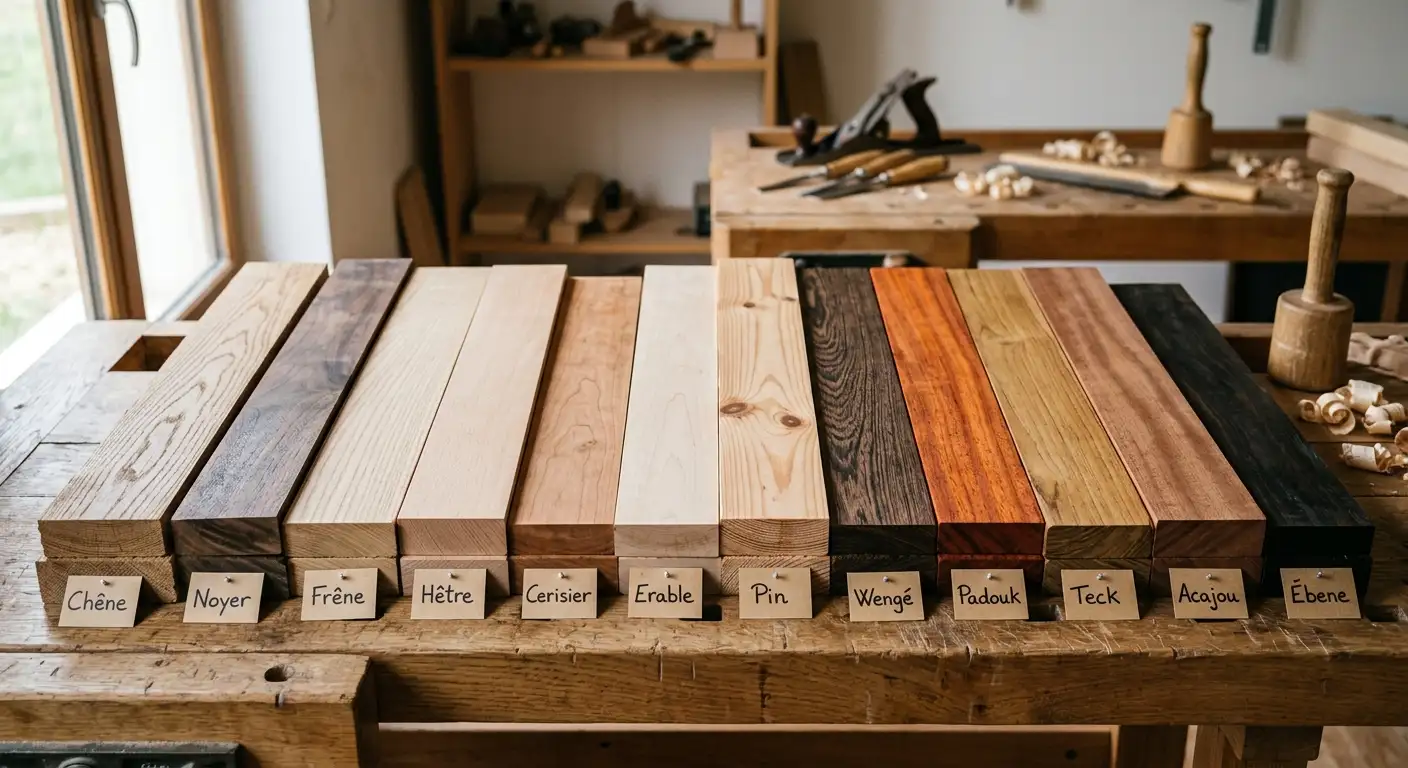
Which saturator should you choose for each wood species?
Density, porosity and the presence of extractives affect product absorption. It is important to match the saturator to the surface and carry out a preliminary test on unusual woods.
| Wood species | Main characteristic | Anova Bois recommendation |
|---|---|---|
| Pine / pressure-treated wood | Softwood; check that the surface is dry | ST600 if compatible |
| Douglas fir / larch | Softwoods with variable absorption | ST600 if compatible |
| Oak | Tannin-rich wood | Test and check compatibility |
| Ipé / cumaru | Dense exotic hardwoods | SBE600 |
| Teak / garapa | Exotic hardwoods with extractives or variable absorption | SBE600 if compatible |
These recommendations should be checked against the technical data sheets and the actual condition of the surface.
Water-based or solvent-based wood saturator: which is better?
Neither type is always superior.Performance depends on the complete formulation, pigments, wood compatibility and application quality.
| Criterion | Water-based | Solvent-based |
|---|---|---|
| Tool cleaning | Usually with water | With the recommended solvent |
| Odour | Often less noticeable | Varies by formula |
| Drying | Depends on the product | Depends on the product |
| Outdoor protection | Depends on the formulation and pigments | Depends on the formulation and pigments |
| Maintenance | Depends on whether it forms a film | Depends on whether it forms a film |
Anova Bois ST600 and SBE600 saturators are water-based products.
Clear or tinted wood saturator: which offers better protection?
A pigmented finish generally slows greying more effectively than a completely clear finish.Pigments contribute to UV protection.
Clear: preserve the appearance
A clear finish better preserves the original appearance but generally does not effectively prevent natural greying caused by sunlight.
Tinted: improve UV protection
A suitable tint can even out the colour and help slow visible changes in the wood without completely preventing ageing.

Wood saturator, wood stain or oil: which should you choose?
A wood saturatoris generally non-film-forming and particularly suitable for decking and natural-looking finishes.
A wood stainis generally film-forming and microporous; it is mainly used on suitable vertical surfaces.
Wood oilcan be a penetrating finish, but its performance and application requirements vary by formulation.
For decking, a suitable saturator is often the easiest option to maintain. For shutters or cladding, both saturators and wood stains can be appropriate.
| Criterion | Saturator | Wood stain | Oil |
|---|---|---|---|
| Appearance | Natural, often matt | Matt to gloss, depending on the product | Varies |
| Decking | Particularly suitable | Generally not recommended unless specifically formulated for it | Depends on the formula |
| Cladding | Suitable | Suitable | Depends on the formula |
| Renovation | Often without complete stripping | Depends on the condition of the film | Depends on the formula |
How do you apply a wood saturator correctly?
Surface preparation is essential: the wood must be clean, sound, sufficiently dry and free from incompatible previous finishes.
Prepare the wood
Remove dirt. If the wood has turned grey, use a suitable wood brightener. Remove any incompatible old finishes.
Choose suitable weather
Avoid rain, frost, direct strong sunlight and excessively hot surfaces. Follow the temperature limits in the technical data sheet.
Apply evenly
Stir the product, work with the grain and avoid puddles or excess build-up.
Allow to dry
Follow the drying and return-to-use times specified for the product and weather conditions.
How many coats of wood saturator should you apply?
For Anova Bois saturators, the general recommendation is one coat on decking and two coats on cladding and garden furniture.Always follow the technical data sheet for the specific product and the characteristics of the surface.
| Surface | Anova Bois recommendation | Important point |
|---|---|---|
| Decking | 1 coat | Thin and even |
| Cladding | 2 coats | Follow recoating times |
| Garden furniture | 2 coats | Avoid excess build-up |
The number of coats is not universal: it varies with the formulation and manufacturer's instructions. Applying another coat to wood that can no longer absorb the product may impair the result.
How do you maintain saturated wood and avoid mistakes?
A saturator does not provide permanent protection. Maintenance depends on exposure, climate, wood species, pigmentation and use.
Clean the wood regularly, check the finish and take action when the colour or protection deteriorates. Heavily greyed wood may need a wood brightener before refinishing.
The most common mistakes
Applying to damp wood, leaving excess product, neglecting preparation, expecting a clear finish to block UV rays or applying saturator directly over an existing film-forming wood stain.

Two saturators for different wood species
Your choice of product should depend primarily on compatibility with the surface. Check each product page for specifications, coverage and instructions.

ST600 Decking Saturator
A saturator for decking and other compatible wooden surfaces, including many softwoods.
View the ST600 range
SBE600 Exotic Wood Saturator
A formula suited to dense exotic hardwoods, particularly ipé and cumaru decking.
View the SBE600 rangeFAQ: frequently asked questions about wood saturators
What is the best exterior wood saturator?
The best saturator depends on the wood species and surface. For decking, choose a non-film-forming finish suitable for horizontal surfaces; for cladding, prioritise protection suited to UV exposure and weather conditions.
Which saturator should you use on ipé decking?
Choose a saturator designed for dense exotic hardwoods. Anova Bois SBE600 is intended for this type of use, provided the surface is properly prepared.
Which saturator should you use on Douglas fir?
A saturator compatible with softwoods, such as Anova Bois ST600, may be suitable. Check the wood's condition and choose a pigmented finish if you want to slow greying.
Does a wood saturator prevent greying?
A pigmented finish generally slows UV-related greying but cannot prevent it permanently. A completely clear finish generally offers less UV protection.
Can you apply saturator to new wood?
Yes, provided the surface is sufficiently dry, clean and able to absorb the product. Some new, very dense or recently treated woods require special preparation.
Do you need to sand before applying saturator?
Not always. Sanding is useful if the surface has defects or an incompatible old finish. Clean, sound bare wood can sometimes be treated after suitable preparation.
How long does a wood saturator last?
Durability varies with exposure, climate, wood species, shade, product and maintenance. Check the wood regularly rather than relying on a universal lifespan.
Can you apply saturator over an old wood stain?
Generally not if the old stain still forms a film. Incompatible finishes must be removed to allow the wood to absorb the saturator.
Why is my decking sticky after applying saturator?
Too much product, insufficient absorption or disrupted drying may cause stickiness. The remedy depends on the saturator used and the condition of the surface.
When is the best time to apply wood saturator?
Choose a dry period with no rain during the drying time and temperatures within the product's specifications. Avoid direct strong sunlight, frost and excessively hot surfaces.
What is the difference between a wood saturator and a wood brightener?
A wood brightener prepares and revives greyed wood. A saturator is a protective finish applied afterwards to a prepared, dry surface.