





Wide flat brush, standard paintbrush or angled brush: choose the right bristles, shape and width for each timber surface to achieve an even finish without brush marks or excess product.
The quality of a wood saturator finish depends on more than the product itself. How the brush bristles pick up, release and spread the finish is equally important. Long decking boards, vertical cladding and the joints of garden furniture all call for different tools and techniques.
For broad timber surfaces, choose a wide, soft-bristled flat brush (spalter) that can spread the saturator thinly along the wood grain. For edges, corners and smaller details, use a suitably sized flat or angled brush. With water-based saturators, high-quality synthetic bristles are often a practical choice, but always check compatibility with the finish. Natural bristles may also be suitable where the brush manufacturer recommends them.
Wide flat brush, standard brush or detail brush: which should you choose?
All three use bristles to apply the finish, but their shape affects coverage, precision and how evenly the saturator is spread.
Wide flat brush (spalter)
Broad and relatively flat, this brush covers open surfaces quickly. It is our preferred option for spreading saturator evenly across decking boards, panels and larger timber elements.
For this application, see the Spalter Performance 150 mm Flat Brush.
Standard flat brush
A versatile choice for shutters, uprights, rails and narrow boards. Choose flexible bristles that spread the product without leaving pronounced ridges.
For larger areas and less accessible surfaces, see the 120 mm Wide Exterior Wood Stain Brush with 90° Adjustable Head.
Angled or detailing brush
A narrow or tapered head helps you reach corners, joints, edges and areas around fittings. It complements a wide flat brush rather than replacing it.
Which brush should you use on decking, cladding and garden furniture?
| Area | Recommended tool | Why? |
|---|---|---|
| Long decking boards | Wide flat brush | Spread the finish along the board and reduce visible overlaps. |
| Narrow or grooved decking boards | Flat brush matched to the board width; smaller brush where needed | Control edges and remove product collecting in grooves. |
| Timber cladding and fencing | Wide flat brush or standard flat brush | Follow the grain on each board. |
| Shutters, doors and rails | Medium flat brush | Maintain precision around joints. |
| Furniture legs and spindles | Small flat brush and detail brush | Reach edges and connections without overloading. |
| Corners, end grain and exposed fixings | Small detailing brush | Apply a controlled amount of product. |
For very large decking areas, a short-pile roller can speed up initial application. However, finishing with a wide flat brush is generally preferable to level and distribute the saturator. See our separate guide to choosing a roller for decking saturator for the roller-specific advice.
Synthetic or natural bristles: which work best with a wood saturator?
The main factor is the product formulation, not just the timber species.
| Finish type | Bristles to consider | What to watch for |
|---|---|---|
| Water-based wood saturator | Soft, good-quality synthetic bristles rated for water-based finishes | Avoid bristles that swell, deform or shed. |
| Solvent-based wood saturator | Natural or synthetic bristles explicitly rated for the relevant solvents | Not every synthetic brush withstands every solvent. |
| Tinted wood saturator | Even, flexible bristles compatible with the product base | Maintain a wet edge and stir the product to keep the colour consistent. |
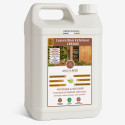
Terrace Wood Saturator ST600 is water-based, so a suitable brush rated for water-based finishes is generally appropriate. Follow the product instructions rather than choosing bristles by appearance alone.
What width of flat brush should you choose?
A brush that is too narrow requires more passes; one that is too wide can be difficult to control on detailed joinery. Match the width to the boards and to your working technique.
| Approximate width | Typical use |
|---|---|
| 20–40 mm | Edges, small joints, spindles and local touch-ups. |
| 50–80 mm | Shutters, furniture, rails and narrow boards. |
| 100–150 mm | Decking, cladding and broad boards; a good balance of coverage and control. |
| Over 150 mm | Large, flat areas where the brush remains easy to handle. |
For longer jobs, consider handle comfort, brush weight and whether the tool accepts a compatible extension pole. A wider brush is not automatically better if you cannot control how much finish it deposits.
How do you apply wood saturator with a brush without leaving marks?
- Prepare the timber. The surface must be clean, dry, dust-free and free from incompatible coatings. Follow the saturator's application conditions.
- Stir the saturator. For tinted finishes, mix the pigments thoroughly before and during application, as instructed.
- Load the bristles lightly. Dip only the working part of the brush and remove excess against the container.
- Work one complete element at a time. Follow the wood grain along the full length of a board where possible, maintaining a wet edge.
- Brush out immediately. Use light, even pressure to spread the finish. Do not leave puddles in corners or grooves.
- Inspect from an angle. Check for glossy patches, drips and excess product before it dries; correct them according to the instructions.
The brush does not determine the number of coats: the timber and product instructions do. On decking, Anova Bois generally recommends one thin coat of Terrace Wood Saturator ST600 or Exotic Wood Saturator SBE600. For cladding and garden furniture, the usual recommendation is two thin coats, subject to the relevant technical data sheet.

Why does a brush leave marks, streaks or shiny patches?
| Visible issue | Possible cause | What to do |
|---|---|---|
| Darker bands | Overlapping partly dried sections or uneven distribution of tinted finish | Work complete boards, maintain a wet edge and brush out evenly. |
| Brush lines | Bristles too stiff, uneven spreading or repeated brushing during drying | Use a softer brush and avoid late reworking. |
| Shiny or tacky patches | Excess saturator left on the surface or insufficient timber absorption | Do not add more finish; follow the product's remedial instructions. |
| Runs on cladding | Overloaded brush or product collecting along edges | Load less finish and smooth runs before drying. |
| Loose bristles in the finish | Worn or low-quality brush | Replace the brush and carefully remove loose bristles before the finish sets, where possible. |
Not every mark is caused by the brush. Hot timber, previous treatments and uneven absorption can also affect the result. Always test on a small, inconspicuous area first.
How should you clean and store a brush after applying wood saturator?
Clean brushes promptly after use: once the finish hardens deep within the bristles, it becomes much harder to remove.
- Remove as much excess finish as possible with a cloth or on a suitable surface; do not discharge it into the environment.
- For a water-based finish such as Terrace Wood Saturator ST600, clean tools with water as directed in the technical data sheet.
- For solvent-based finishes, use only the cleaner recommended by the manufacturer and follow the relevant safety precautions.
- Rinse as directed, reshape the bristles and allow the brush to dry without resting its weight on the bristle tips.
Frequently asked questions about brushes for wood saturator
What is the best brush for applying wood saturator?
For broad surfaces, a wide, soft-bristled flat brush compatible with the finish usually offers good control. Keep a smaller brush for edges and details.
Should I choose natural or synthetic bristles?
For water-based saturators, good-quality synthetic bristles are often suitable. For solvent-based products, check both the brush's solvent resistance and the saturator's instructions. Some natural-bristle brushes are suitable for several finish types.
Which brush is best for timber cladding?
Choose a flat brush or wide staining brush matched to the board width, and work along the grain. Use a smaller brush for joints and edges.
Can I use the same brush for decking and shutters?
Yes, provided it is compatible with the finish, but a wide brush is more efficient on decking while a medium brush gives greater control around shutter details.
Why does my saturator leave brush marks?
Possible causes include stiff bristles, overloading, working back into a drying area or uneven timber absorption.
Should I press hard with a wide flat brush?
No. Light, even pressure is usually enough to spread the finish. Excessive pressure can create marks or push the product around unevenly.
Which brush should I use for grooves and corners?
Use a small flat or angled detailing brush for accuracy, and remove any excess product from recesses.
How do I clean a brush used with Terrace Wood Saturator ST600?
Terrace Wood Saturator ST600 is water-based and its instructions specify cleaning tools with water. Clean the brush before the finish dries.
The right brush makes an even finish easier
Choose a brush that is compatible with your wood saturator, then select its width to suit the area. For broad surfaces, favour a wide flat brush; for details, keep a smaller precision brush handy. Explore the Anova Bois range of wood saturators.
Browse our wood application accessories to prepare for your next project.
Anova Bois practical guide. Product-specific technical instructions take precedence over general brush-selection advice.