




Which wood saturator should you choose for pine decking?
Pressure-treated or untreated pine, new or weathered boards: find the right finish, prepare your decking and keep it looking its best.
Find the right saturator ↗Pine is popular for its affordable price and warm appearance, but outdoor decking is exposed to moisture, UV rays and greying. A wood saturator suitable for horizontal outdoor surfaces can help preserve its appearance and make maintenance easier. The right choice depends on whether the pine is pressure-treated and on the condition of the boards.
Check moisture, surface condition and suitability for finishing.
Test the colour on your actual decking rather than relying on a colour chart.
Monitor exposed areas and renew the finish when needed.
1. Why does pine decking need specific protection?
Pine is a softwood and behaves differently from dense tropical hardwoods. Depending on the timber, treatment and exposure, boards may absorb a finish unevenly. Knots, resin-rich areas and variations in porosity can also affect the final colour.
Decking is a horizontal surface exposed directly to rainfall, sunlight and foot traffic. A product described simply as suitable for “outdoor wood” is not necessarily appropriate for decking.
2. Which saturator should you choose for your pine deck?
| Pine decking condition | Main priority | Recommended approach |
|---|---|---|
| New, untreated pine | Check drying and surface preparation | Softwood-compatible decking saturator, with a colour test |
| New, pressure-treated pine | Allow the timber to dry and stabilise | Saturator suitable for treated pine and horizontal surfaces |
| Greyed pine | Clean and use a wood brightener if needed | Test the finish on clean, dry, prepared timber |
| Previously saturated pine | Identify the old finish and its condition | Compatible maintenance treatment; remove incompatible coatings first |
Natural, colourless or tinted?
A natural-looking or lightly tinted finish can enhance pine's grain. Pigmented saturators generally offer better UV protection than pigment-free versions. On a sunny, exposed deck, a tinted finish is often preferable; a colourless version may require more frequent maintenance. Always test the chosen colour on an inconspicuous board.
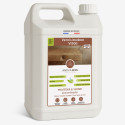
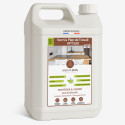
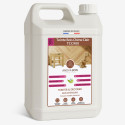
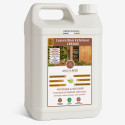
For untreated pine decking, explore Terrace Wood Saturator ST600, available in natural, colourless and tinted finishes. For pressure-treated pine, see Autoclave Wood Saturator SBA600, specifically developed for this type of timber. ST600 is also listed as compatible with pressure-treated wood. Compare the desired appearance and follow the instructions for the product selected.
3. Can you apply a saturator to pressure-treated pine decking?
Yes, provided the product is compatible with pressure-treated timber and the decking meets the specified preparation and moisture conditions. Pressure treatment and a saturator have different roles: the former helps protect timber against biological deterioration according to its treatment class, while the latter helps protect and maintain the surface appearance.
Freshly pressure-treated pine may still contain significant moisture. Applying a finish too early can affect penetration and produce an uneven result. There is no universal waiting period: actual moisture content, weather and the manufacturer's instructions matter more than a fixed number of weeks.
4. How to prepare pine decking before applying a saturator
- Inspect the boards. Look for greying, dirt, resin, old coatings and damaged areas.
- Clean the surface. Remove leaves, dust and deposits. Avoid aggressive pressure washing that may damage soft pine fibres.
- Restore greyed timber if necessary. Use a suitable wood brightener according to its instructions. A brightener is not a substitute for a paint or varnish stripper.
- Deal with old finishes. Paint, film-forming wood stains or incompatible treatments may need to be stripped or sanded away.
- Rinse and allow to dry. Follow the cleaning and drying instructions before applying the saturator.
- Test the result. Check colour, penetration and appearance on a small, inconspicuous area.
For newly installed boards, see our guide on when to apply a saturator to new wooden decking.
5. How to apply a saturator to pine decking
Work on clean, dry timber in suitable weather. Avoid direct, intense sunlight, imminent rain and temperatures outside the product's recommended range.
- Stir or shake thoroughly before and during application, especially for tinted products.
- Work board by board along the wood grain using a suitable brush or wide decking brush.
- Apply one thin, even coat for routine decking treatment, without building up a surface film.
- Avoid excess product. Follow the technical sheet if additional treatment is required for unusually absorbent wood.
- Allow to dry and observe the recommended waiting time before walking on the deck or replacing furniture.
6. How to maintain saturated pine decking
A saturator makes maintenance easier, but it does not permanently prevent greying, moisture exposure or dirt. Maintenance frequency depends on sun exposure, traffic, finish colour and the product used.
- Regularly: remove leaves and debris to limit trapped moisture.
- Periodically: clean gently with a product suitable for wooden decking.
- After harsh weather: inspect high-traffic areas and boards near plants or standing water.
- Before recoating: check that the surface is clean, dry and compatible with the new treatment.
- If the timber has greyed: assess whether cleaning or brightening is required before refinishing.
Inspect the condition of the wood rather than relying on a fixed annual recoating schedule.
7. Common mistakes to avoid
- Applying a saturator while pressure-treated pine is still too damp.
- Using a cladding-only product without checking decking compatibility.
- Choosing a colour based only on the container or colour chart.
- Overapplying the finish or adding coats simply to darken the timber.
- Pressure-washing soft pine too aggressively.
- Confusing cleaning, brightening and stripping an old coating.
- Skipping a test patch, especially on treated or weathered pine.
FAQ: pine decking saturators
What is the best saturator for pine decking?
Choose a product suitable for outdoor decking and softwoods, taking into account whether the pine is pressure-treated and the finish you want. ST600 is designed for decking; SBA600 is specifically designed for pressure-treated wood.
Does pressure-treated pine decking need a saturator?
Not necessarily for the biological protection already provided by pressure treatment. A compatible saturator can help maintain the timber's appearance and protect the surface from weathering.
How long should I wait before treating new pine decking?
There is no universal waiting period. The wood must meet the moisture and preparation requirements in the product instructions, particularly after pressure treatment.
Should I use a colourless or tinted saturator on pine?
Tinted products generally provide better UV protection than pigment-free versions. Choose based on exposure and the appearance you want, and always test the colour first.
How many coats should I apply to pine decking?
One thin coat is the usual Anova Bois decking recommendation. For very absorbent timber or specific products, consult the technical sheet for any additional coat.
Can I apply a saturator to greyed pine decking?
Yes, after suitable preparation. Clean and brighten if necessary, rinse, allow to dry and test the finish.
Can I apply a saturator over an old wood stain?
Not if a film-forming coating remains and prevents penetration. Check compatibility and remove the old finish where necessary.
How can I prevent sticky patches after application?
Avoid excess product, apply only to suitably prepared dry timber and follow the manufacturer's application and drying instructions.
Compare Anova Bois wood saturators and check compatibility with your timber, its treatment and outdoor decking use.
Explore Anova Bois wood saturators →In summary: for pine decking, choose a saturator suitable for softwoods and horizontal outdoor surfaces. Preparing the timber properly—especially new pressure-treated or weathered pine—is as important as choosing the right colour. A thin, even application and regular maintenance help preserve the finish.