Varnish protects and enhances wood, but over time, it can yellow, peel, or lose its shine. Traditionally, people think that long sanding is required to return to bare wood. However, sanding is often inconvenient: dust everywhere, noise, physical effort, not to mention the risk of damaging delicate moldings or an antique piece of furniture.
Good news: there are effective solutions to remove varnish without sanding. In this guide, we will explore the different methods, their advantages and limitations, and most importantly, give you practical advice on how to prepare and protect your wood after stripping.
Why avoid sanding when possible?
The disadvantages of sanding
Dust production: sanding generates a lot of fine particles that are difficult to clean.
Long and tiring work: sanding a varnished piece of furniture by hand can take hours.
Risk of damaging the wood: excessive sanding can dig into the wood or alter its moldings.
Special cases
Antique furniture: it is better to preserve the wood’s natural patina.
Fragile or soft woods: they scratch easily under the action of a sander.
Sculpted surfaces: sanding would be almost impossible to perform properly.
Methods to remove varnish without sanding
Chemical strippers (hazardous)
Wood strippers are designed to soften and remove layers of varnish, stains, or paint. Available in gel or liquid form, they act deeply on the protective film.
Steps for use:
Apply the stripper with a brush.
Let it sit (10 to 30 minutes depending on the product).
Remove the softened varnish with a spatula.
Rinse with a damp cloth.
⚠️ Caution: these products are effective but also very harmful to health and the environment. Always work with gloves, a mask, and in a well-ventilated area.
👉 Ideal method for thick and resistant varnishes.
The thermal method
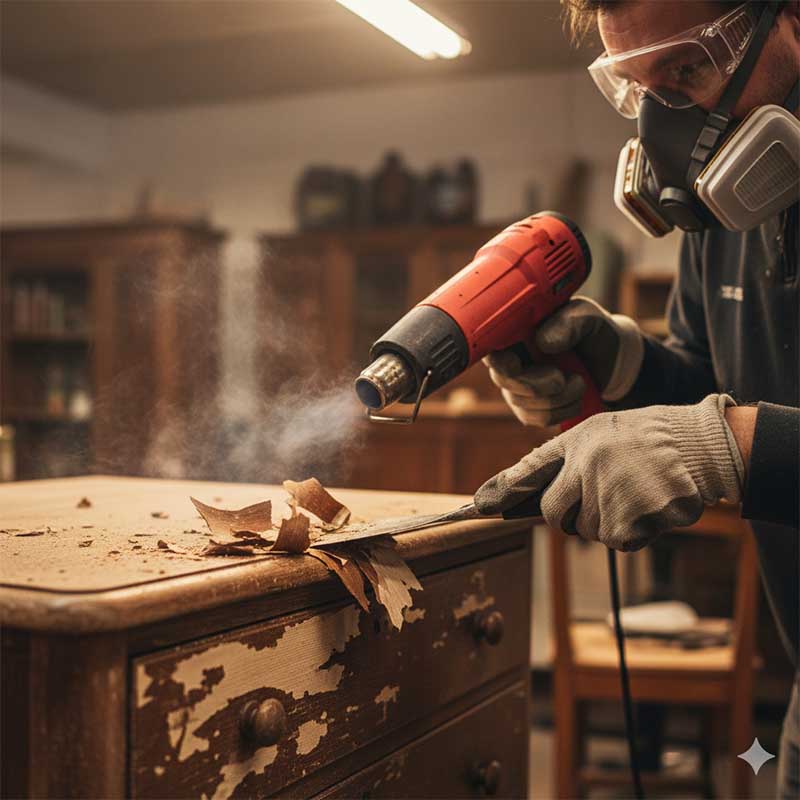
The heat gun blows very hot air (up to 600°C). This heat softens the varnish, which can then be scraped off.
Advantages: fast, chemical-free.
Disadvantages: risk of burning the wood if used improperly.
👉 Suitable method for large flat surfaces.
Natural alternatives (thin and light varnishes)
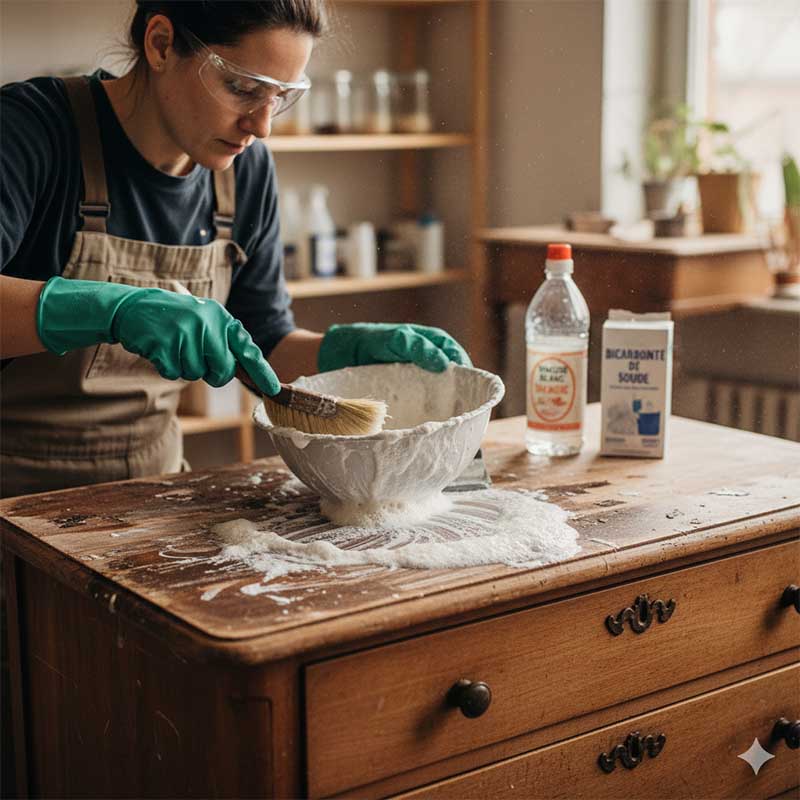
For thin layers of varnish, some homemade solutions can work:
Baking soda + white vinegar: slightly abrasive action.
Soda crystals diluted in hot water: helps soften the varnish film.
Limitations: not very effective on thick varnish.
👉 Suitable method for small furniture or lightly varnished surfaces.
Sandblasting (air-abrasion)
Air-abrasion consists of projecting a very fine abrasive with compressed air. Gentler than sandblasting, it effectively removes varnish while preserving moldings and delicate surfaces.
Advantages: fast, precise, eco-friendly depending on the abrasive.
Disadvantages: requires specific equipment or a professional.
👉 Ideal for antique furniture and carved woodwork.
How to prepare the wood after stripping?
Preparation steps
Clean the residues with a damp cloth
Degrease the surface (especially after using a chemical stripper).
Lightly sand with fine grit to smooth (optional).
Which product should be applied after removing varnish?
Once the wood is stripped bare, it must be protected:
Wood wax: warm finish, ideal for antique furniture.
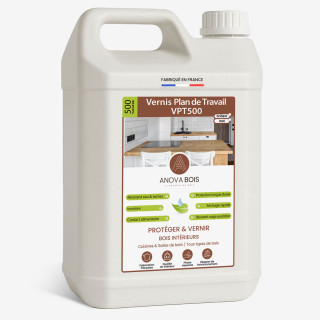
Wood varnish: durable protection against stains and wear, ideal for countertops.
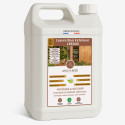
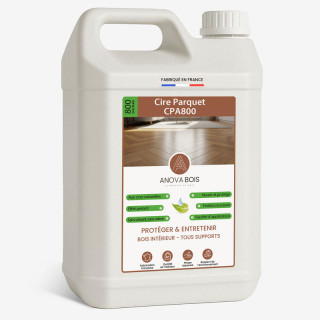
👉 For a natural finish, Anova Bois wax is an excellent option after stripping.
🪵 Method
✅ Advantage
⚠️ Limitations
❤️ Ideal for
Chemical stripper
Very effective
Harmful products, strong odor
Thick varnish
Heat gun
Fast, chemical-free
Risk of burning the wood
Large flat surfaces
Natural alternatives
Gentle, eco-friendly
Not effective on thick varnish
Small furniture, thin varnish
Air-abrasion
Fast, precise, preserves moldings
Expensive equipment
Antique furniture, carved surfaces
Conclusion
Removing varnish without sanding is possible thanks to strippers, a heat gun, or natural methods for light varnishes. Each technique has its advantages, but all help avoid the drawbacks of sanding.
👉 Don’t forget to properly prepare the wood after stripping, then protect it with a suitable wax or Anova Bois varnish.