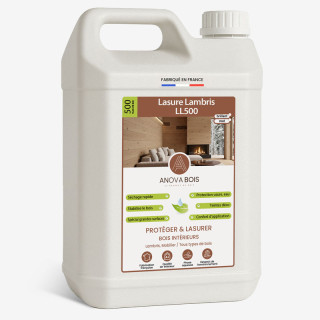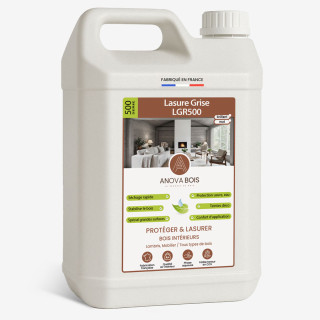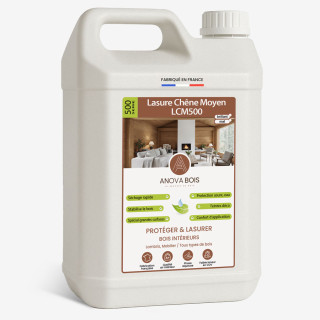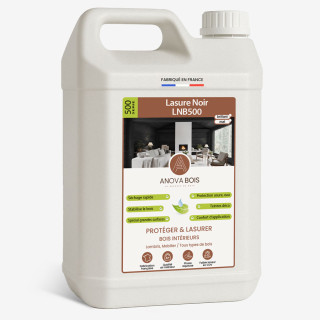
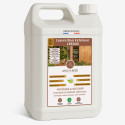


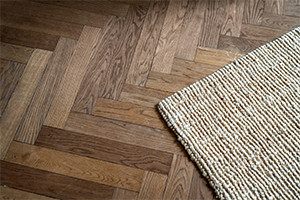



A wooden staircase is a central feature of the home. Over time, its colour can become dull, the wood can become stained and its finish can wear away. Applying a wood stain helps to enhance the natural grain of the wood, change or revive its colour and provide a protective finish.
Wood stain is particularly suitable for vertical or less heavily used parts of a staircase, such as risers, stringers, posts and banisters. However, stair treads are exposed to repeated foot traffic and friction. Depending on the level of use, a finish specifically designed to withstand abrasion, such as a floor varnish, may be more suitable.
Here is how to choose the right product, prepare the surface and stain a wooden staircase under the right conditions.

Why stain a wooden staircase?
Wood stain is primarily used to preserve the natural appearance of the wood. Unlike opaque paint, it generally allows the wood grain to remain visible and can provide different shades depending on the colour selected.
On an interior wooden staircase, it can be used to:
- revive or change the colour of the wood;
- enhance its grain and natural appearance;
- help limit the penetration of certain stains and moisture, depending on the finish used;
- create a more uniform appearance on a renovated staircase;
- provide a decorative finish to risers, stringers, posts and banisters.
Wood stain and floor varnish do not serve exactly the same purpose. A floor varnish generally forms a film that provides greater resistance to abrasion and repeated foot traffic. It is therefore particularly suitable for heavily used stair treads.
For more information on this subject, see our guide on how to protect a wooden staircase.
Wood stain or floor varnish for a staircase?
| Criterion | Wood stain | Floor varnish |
|---|---|---|
| Appearance of the wood | Preserves and enhances the wood grain | Generally preserves the grain beneath a protective film |
| Abrasion resistance | Varies depending on the product | High when using a product designed for floors and stairs |
| Ideal use | Stringers, risers, banisters and decorative elements | Stair treads and heavily used areas |
| Finish | Natural, clear or coloured depending on the product | Matt, satin or gloss depending on the finish |
Which wood stain should you choose for a staircase?
The choice of wood stain depends on the part of the staircase being treated, the type of wood, the condition of the surface and the desired appearance.
Choose a wood stain suitable for interior wood
For a staircase located inside the home, choose a wood stain suitable for interior woodwork. Always check the uses specified by the manufacturer, particularly when the product is to be applied to a surface that is regularly touched or subjected to wear.
It is also important to distinguish between finishes that are more or less film-forming. A finish that forms a film on the surface generally provides greater protection against wear, but this does not necessarily mean that it is suitable for stair treads. For these areas, the product must be specifically designed to withstand abrasion.
Clear or coloured wood stain?
A clear wood stain helps preserve the original colour of the wood as much as possible while enhancing its grain. It is particularly suitable for wood species whose natural appearance you want to retain.
A coloured wood stain, on the other hand, can be used to change or intensify the colour of the surface. It can be used to darken a light-coloured staircase, coordinate its shade with wooden flooring or other woodwork, or simply give it a more contemporary appearance.
The final result depends greatly on the wood species, its original colour and its porosity. It is therefore recommended to carry out a preliminary test on a small, inconspicuous area.
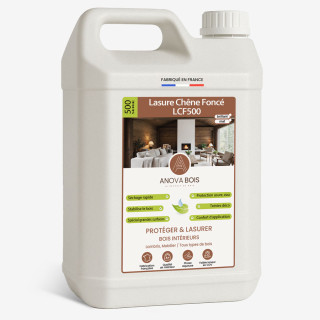
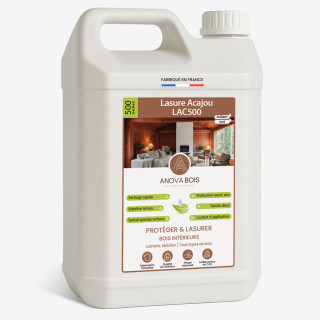
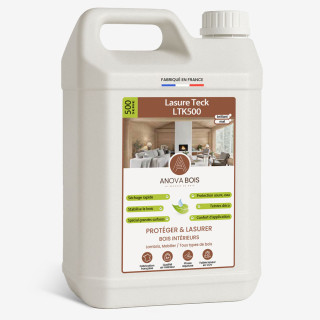
You can discover the different finishes available in our wood stain range.
How to prepare a staircase before applying wood stain
Surface preparation is essential. Applying wood stain to a poorly prepared surface can result in colour variations, poor adhesion or an uneven finish.
1. Remove old finishes
If the staircase has already been painted, varnished, sealed or coated with an incompatible old finish, this must be removed to obtain a surface that allows the new finish to adhere correctly.
Depending on the condition of the staircase, this may require mechanical sanding and/or the use of a suitable paint or varnish stripper.
2. Sand the wood
Sand the staircase in the direction of the wood grain. When removing an old finish, start with an abrasive coarse enough to remove it, then gradually move to a finer grit to achieve an even surface.
However, avoid over-polishing the wood, as a surface that is too smooth may reduce the penetration of certain products.
3. Remove dust thoroughly
After sanding, vacuum the entire staircase and remove any remaining dust. The surface must be clean, dry, sound and free from dust or grease before application.
If the wood has greasy marks or persistent dirt, suitable cleaning or degreasing may be necessary before continuing.
How to apply wood stain to a staircase
1. Mix the wood stain thoroughly
Mix the product thoroughly before and during application, particularly when using a coloured wood stain. Pigments can settle at the bottom of the container and cause colour variations if they are not properly mixed back into the product.
2. Use a suitable brush
On a staircase, a brush allows you to work precisely around corners, risers, stringers, spindles and other difficult-to-reach areas.
Apply the product evenly in the direction of the wood grain and avoid excessive application, runs and visible overlap marks.
3. Apply the recommended number of coats
The number of coats depends directly on the wood stain used. Some products require several applications to achieve the desired finish. Always follow the recommendations provided in the product's technical data sheet.
If light sanding between coats is recommended, use a fine abrasive and carefully remove all dust before applying the next coat.
4. Respect the drying times
Do not rely solely on the surface feeling dry to the touch. Follow the manufacturer's recommended drying time between coats as well as the time required before putting the staircase back into use.
This is particularly important for a staircase, as using it too soon can mark or damage a finish that has not fully hardened.
How to achieve an even finish
On larger surfaces such as stringers or risers, work without excessive interruptions to avoid visible overlap marks. When using a coloured wood stain, also make sure you have enough product to complete the area using the same mixture.
A few good practices can help improve the final result:
- always work in the direction of the wood grain;
- apply even coats without overloading the surface;
- mix coloured products thoroughly;
- follow the recommended application temperatures and conditions;
- carry out a preliminary test to check the final colour;
- respect the drying times before using the staircase.
How to maintain a stained wooden staircase
Maintenance mainly depends on the finish used and the part of the staircase concerned. A stringer or riser is subjected to much less wear than a stair tread and will generally require less frequent maintenance.
For routine maintenance, use gentle cleaning methods and avoid aggressive or abrasive products that could damage the finish.
When the appearance becomes dull or the protection begins to show signs of wear, renovation may be necessary. Depending on the condition of the surface and the product originally applied, cleaning, light sanding or more complete stripping may be required before applying a new coat.
FAQ: staining a wooden staircase
Can you apply wood stain to stair treads?
It depends on the product used. Stair treads are subjected to significant abrasion caused by repeated foot traffic. A conventional wood stain designed for woodwork is therefore not necessarily suitable. For heavily used areas, choose a finish specifically designed for floors or stairs, such as a suitable floor varnish.
Do you need to sand a staircase before staining it?
Yes, in most renovation projects. Sanding helps remove incompatible old finishes, creates a more even surface and improves the adhesion of the new finish. The amount of sanding required will depend on the initial condition of the wood.
How many coats of wood stain should you apply to a staircase?
There is no universal number of coats. It depends on the formulation of the product and the desired result. Follow the instructions in the technical data sheet of the chosen wood stain rather than automatically applying two or three coats.
Can you apply wood stain over a previously varnished staircase?
In most cases, not directly. Varnish forms a film that can prevent the wood stain from penetrating or adhering correctly. It is generally necessary to remove the old finish and properly prepare the bare wood before application.
In summary
Staining a wooden staircase is an effective way to revive its colour, enhance its grain and protect certain parts of the staircase. The success of the project depends primarily on choosing a finish compatible with the intended use and carefully preparing the surface.
For risers, stringers, banisters and other areas that are not heavily exposed to abrasion, wood stain is an attractive finish for preserving the natural appearance of the wood. For heavily used stair treads, it is preferable to choose a product specifically designed to withstand repeated foot traffic.