


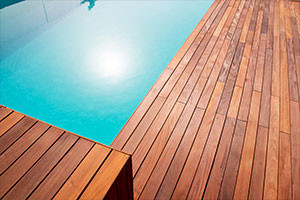
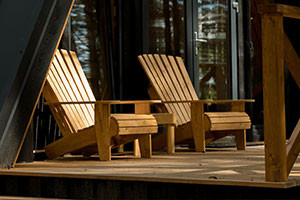



A coloured wood stain protects wood while changing its appearance with a tinted finish that generally allows the natural grain to remain visible. Unlike paint, which covers the surface more completely, wood stain enhances the natural appearance of the wood and makes it easy to personalise furniture, panelling, doors and other woodwork.
There are now wood stains designed for different uses. To achieve suitable protection, it is essential to choose a product formulated for the intended location of the wood, whether indoors or outdoors.
What is a coloured wood stain?
A coloured wood stain is a finishing product that adds colour to wood while generally retaining a certain degree of transparency. It can therefore change or enhance the colour of the surface without completely concealing the wood grain and texture.
Depending on the chosen shade and the number of coats applied, the result can be subtle or more pronounced. Natural wood tones can enhance the original appearance of the wood, while more contemporary colours can transform its look more significantly.
Indoors, coloured wood stain offers several advantages:
- it colours the wood without completely hiding its grain;
- it protects the surface against minor everyday wear and damage;
- it makes woodwork easier to clean and maintain;
- it makes it easy to personalise furniture or decorative wooden elements;
- it is available in a wide range of colours and finishes.
Coloured wood stain, paint or varnish: what are the differences?
Wood stain, paint and varnish are three different solutions for decorating or protecting wood.
A coloured wood stain adds colour while generally allowing the wood grain to remain visible. It is therefore a good solution when you want to change the colour of a wooden surface while retaining its natural appearance.
An interior wood paint, on the other hand, provides a much more opaque finish. It is particularly suitable when you want to completely change the appearance of the surface and achieve an even, uniform colour.
Finally, a wood varnish forms a protective film that is particularly useful for surfaces subject to frequent use. It can be colourless to preserve the natural colour of the wood or tinted depending on the desired finish.
Can coloured wood stain be used outdoors?
Yes, provided you use a wood stain specifically formulated for exterior wood. A stain designed exclusively for indoor use should not be applied to woodwork exposed to rain, UV rays and changing weather conditions.
For exterior vertical surfaces such as cladding, shutters, doors, gates and other joinery, a suitable exterior wood stain creates a microporous protective film while providing the desired finish. This type of protection is designed to provide long-lasting resistance to weathering while allowing the wood to breathe.
For horizontal surfaces such as wooden decking, however, a wood saturator is generally the preferred solution. As a non-film-forming treatment, it penetrates the wood and makes maintenance particularly straightforward because it does not peel.
An exterior wood paint is another option when an opaque, covering finish is required.
Where can coloured wood stain be used indoors?
Coloured wood stain can be used on many wooden elements inside the home. It is particularly useful when you want to decorate a surface without completely hiding the natural character of the wood.
Wooden furniture
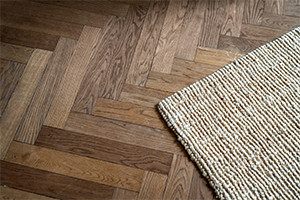
Wardrobes, chests of drawers, tables, chairs and smaller pieces of furniture can all be personalised with a tinted wood stain. It is particularly useful for updating a piece of furniture while retaining the appearance of the natural wood grain.
Panelling and woodwork
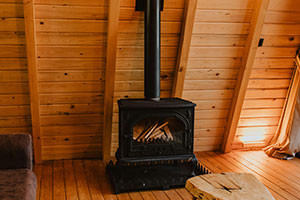
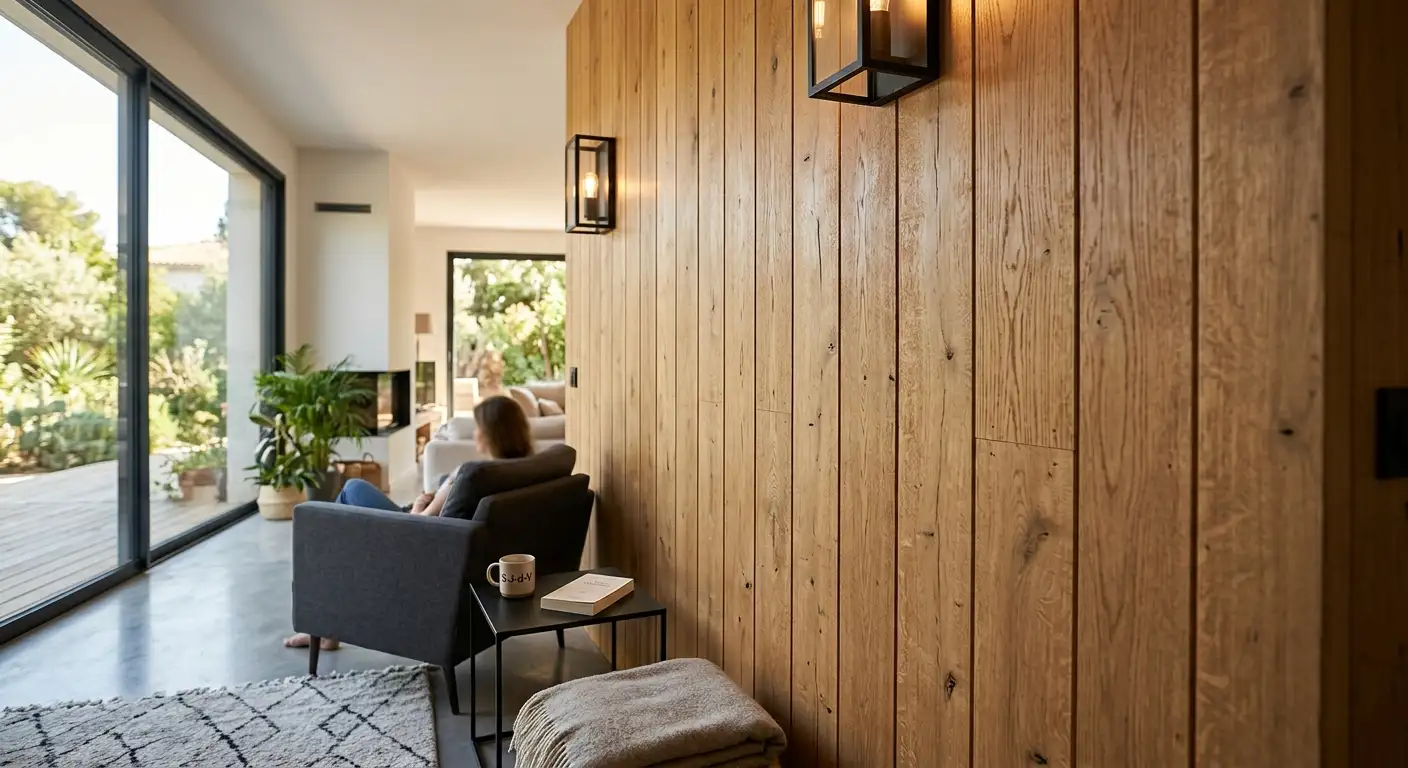
Coloured wood stain is also suitable for panelling, beams, doors and various types of interior woodwork. For example, it can be used to visually brighten wooden panelling or, alternatively, give it a warmer tone.
Decorative wooden elements
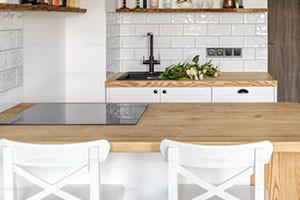
Shelves, frames, decorative panels and other wooden objects can also be finished with a coloured wood stain. The wide choice of shades makes it easy to coordinate the wood with the interior décor of the room.
How to apply coloured wood stain
The quality of the final result depends as much on the preparation of the surface as on the product itself. Wood stain should be applied to clean, sound and properly prepared wood.
1. Prepare the wood
On bare wood, lightly sand in the direction of the grain to achieve an even surface and promote good penetration of the product. Then carefully remove all sanding dust.
If the wood already has an incompatible existing finish, this should be removed by sanding or stripping before applying the new wood stain.
2. Mix the wood stain thoroughly
Pigments can settle at the bottom of the container. Mix the wood stain thoroughly before and during application to ensure an even colour across the entire surface.
3. Apply the wood stain
Apply the product using a suitable paintbrush, brush or roller, working in the direction of the wood grain. Apply even coats and follow the quantities recommended by the manufacturer.
Always observe the recommended drying time before applying the next coat. Depending on the product and the desired finish, several coats may be required.
4. Maintain the finish
The frequency of maintenance mainly depends on the surface, how it is used and the product chosen. On lightly used interior woodwork, a high-quality wood stain can retain its appearance for a long time. A new application can be carried out when the finish begins to lose its original appearance.
How to choose the right wood stain colour
The choice mainly depends on the wood species, its original colour and the desired style. As wood stain is generally transparent or semi-transparent, the natural colour of the wood directly influences the final result.
Natural wood tones help retain a traditional and authentic appearance. Lighter shades can make a room feel brighter, while deeper colours can create contrast or give woodwork greater character.
It is always advisable to carry out a test on a small, inconspicuous area before treating the entire surface. The number of coats applied can also affect the intensity of the final colour.
Which coloured wood stain should you choose?
The first consideration is to choose a wood stain that is genuinely suitable for the intended use. Interior woodwork is not exposed to the same conditions as shutters or cladding subjected to the weather throughout the year.
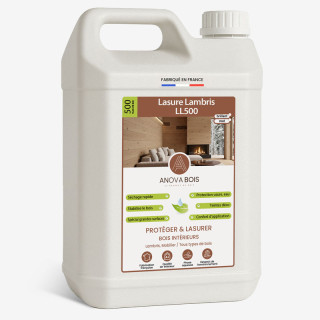
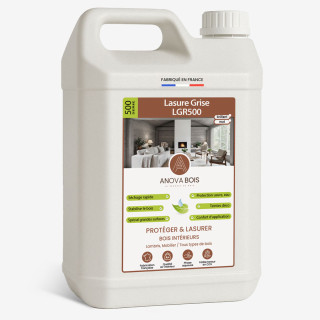
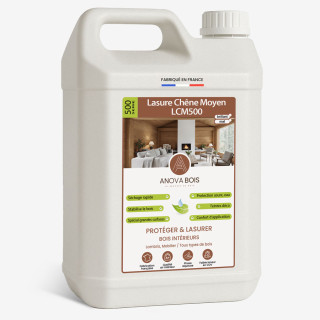
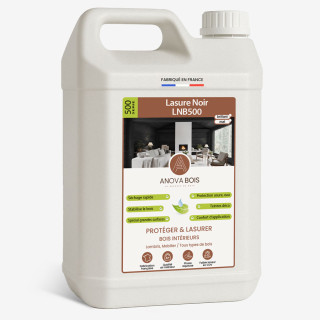
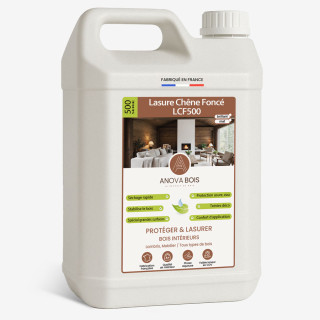
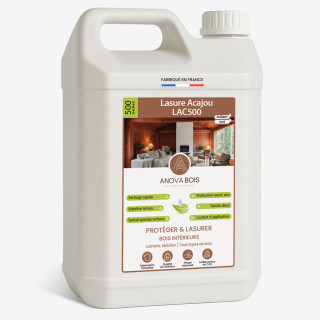
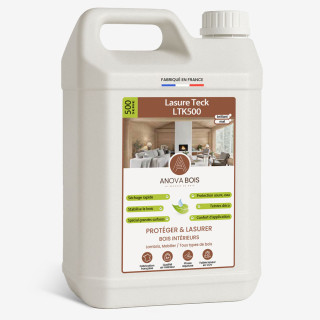
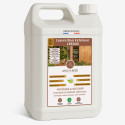
Anova Bois offers a range of wood stains designed to protect and decorate wood according to its intended use. Interior wood stains are available in a variety of colours, allowing you to personalise furniture, panelling and woodwork while retaining the natural appearance of the wood.
For outdoor applications, always choose a wood stain specifically formulated to withstand UV rays, rain and changing weather conditions. On vertical wooden surfaces, it provides a durable solution when a stained finish and microporous protective film are required.
Key points: for furniture, panelling and interior woodwork, a coloured wood stain allows you to personalise the wood while keeping its grain visible. Outdoors, use a dedicated exterior wood stain on vertical surfaces. For horizontal surfaces such as decking, choose a suitable wood saturator.
FAQ about coloured wood stain
Does coloured wood stain hide the wood grain?
No. In fact, this is one of its main advantages. Unlike opaque paint, coloured wood stain generally allows the wood grain to remain visible. However, the level of transparency depends on the shade, the product and the number of coats applied.
Can coloured wood stain be applied over previously stained wood?
Yes, provided the existing finish is sound and compatible with the new product. Light sanding may be necessary to improve adhesion. If the existing finish is badly deteriorated, it is preferable to properly prepare the surface before applying the new wood stain.
Can coloured wood stain be used on furniture?
Yes. Coloured wood stain is particularly suitable for furniture when the aim is to change its colour while retaining the natural appearance of the wood. For surfaces subject to heavy use, however, the required level of resistance should also be taken into account.
What is the difference between coloured wood stain and wood paint?
Wood stain colours the wood while generally allowing the grain to remain visible. Paint provides a more opaque and uniform finish and covers more of the wood's natural appearance.
Are coloured wood stains available for exterior use?
Yes. A wood stain specifically formulated for exterior use can be applied to vertical surfaces such as shutters, cladding, doors and other exterior woodwork. It must be designed to withstand UV rays, rain and changing weather conditions. A wood stain intended exclusively for interior use should therefore not be applied to wood exposed to the weather.